Reading the USDA Hardiness Zone Map for Florida Perennials
A USDA hardiness zone can help you decide whether a perennial is likely to survive winter in your part of Florida. But it cannot tell you everything a plant needs to thrive. Use the map as a first screen for cold tolerance, then weigh your yard’s heat, moisture, light, and local cold spots before choosing what to plant.
What the USDA Hardiness Zone Map Tells You
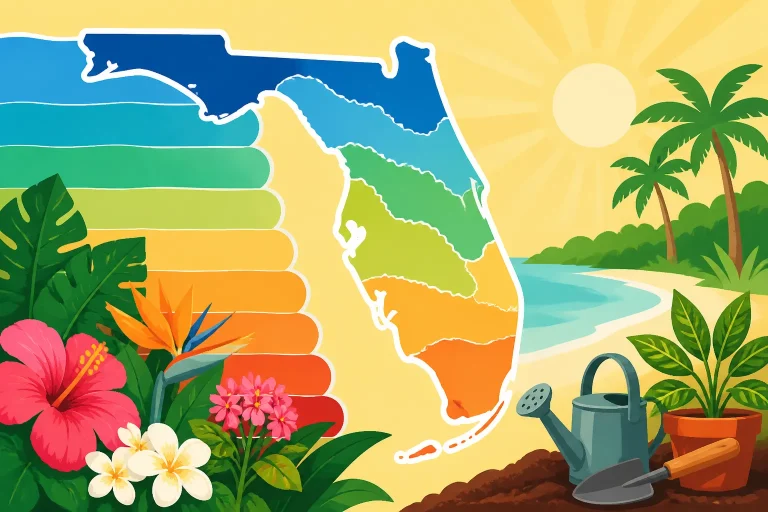
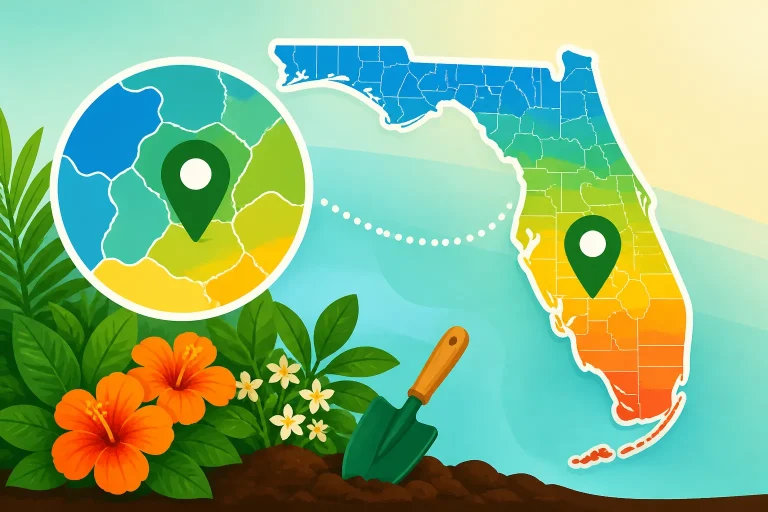
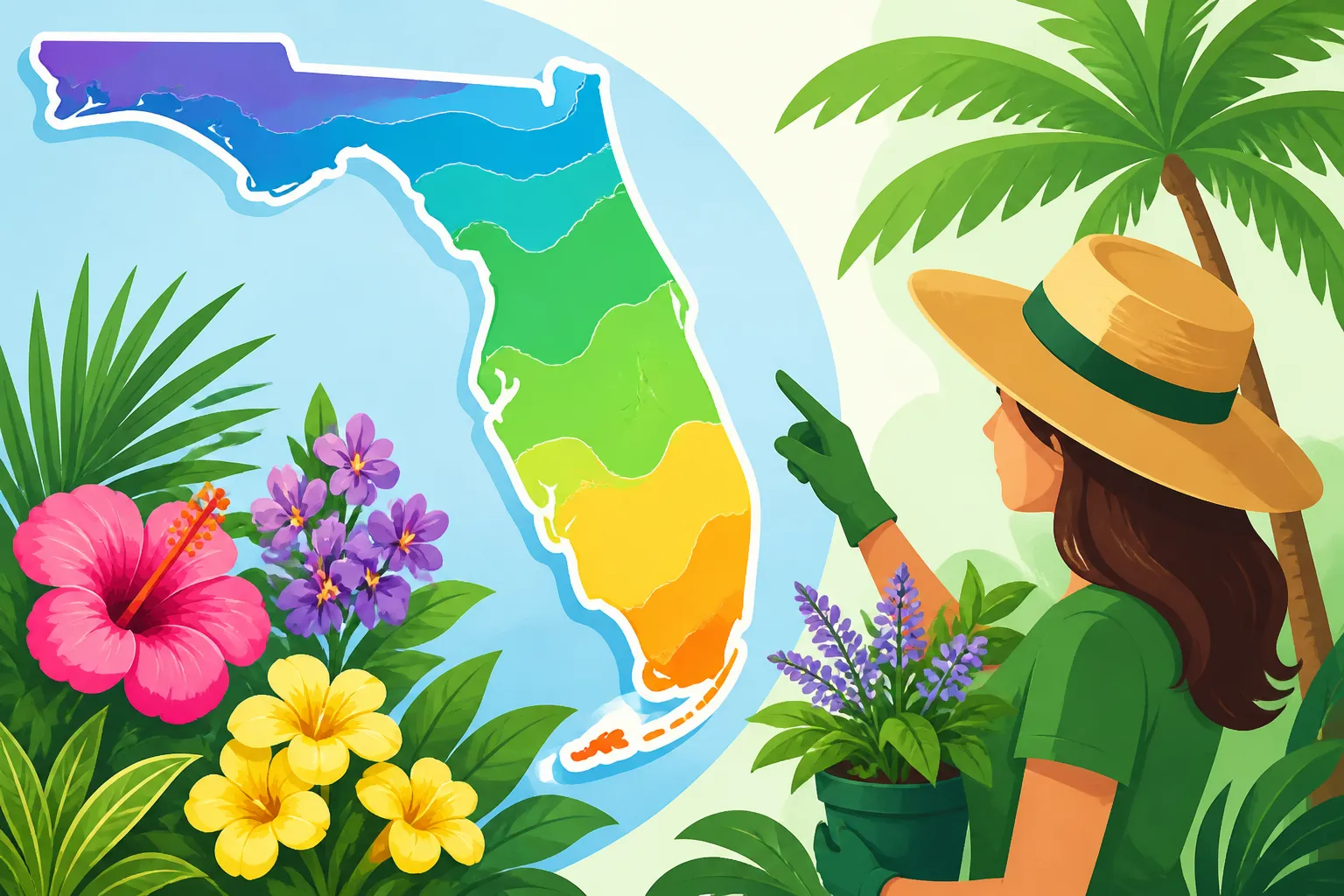
The USDA Plant Hardiness Zone Map classifies areas by their average annual extreme minimum winter temperature. It is a tool for estimating whether a perennial can tolerate the coldest winter conditions typical of an area—not a prediction of the lowest temperature in any one year.
The map uses bands of average annual extreme minimum temperatures, with each full zone divided into narrower half-zones. A plant’s hardiness rating indicates the cold conditions it is expected to tolerate. If a plant label gives a zone range, it describes a cold-tolerance range, not a promise that the plant will thrive in every climate within it.
That distinction matters in Florida. A perennial may meet the map’s cold-tolerance test and still struggle because it dislikes intense summer heat, damp soil, salt exposure, or a particular pattern of sun and shade. Conversely, a plant may suffer leaf damage or die back in a cold snap yet regrow from its roots if those remain protected. The map cannot capture every one of these outcomes.
Think of the zone as a screening tool:
- It helps answer: Is winter cold in this area likely to be a serious risk for this perennial?
- It does not answer: Is this plant suited to this yard’s summer heat, rainfall, soil, drainage, sun, or maintenance needs?
- It does not promise: That a plant will survive every cold event, or that a plant suited to the zone will flourish in every spot.
For a quick starting point, look up the area where you garden with How to Find Your USDA Hardiness Zone in Florida by ZIP Code. A ZIP code is a convenient way to begin, but the map represents areas rather than guaranteeing conditions at a specific address. Your yard’s exposure, elevation, nearby buildings, trees, and water can make a planting spot warmer or colder than the surrounding area.
How to Read the Map for a Florida Yard
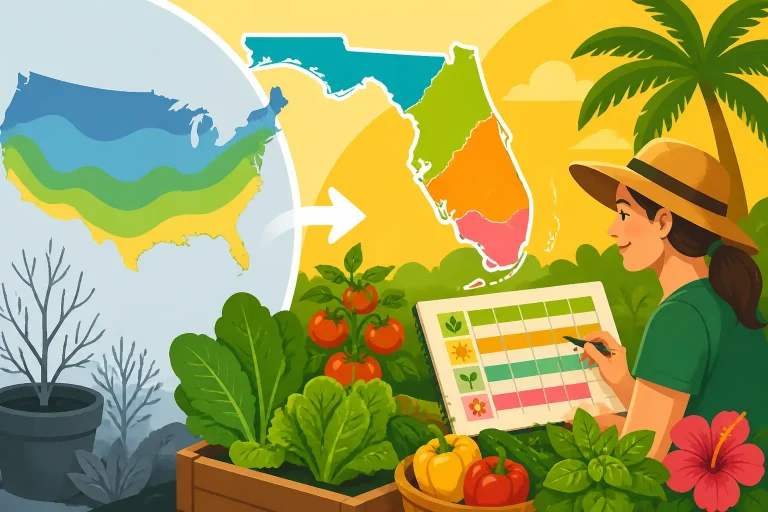
Florida’s long north-to-south shape and varied geography mean the map should be read locally, not as a single statewide rating. A zone shown for one part of the state does not describe every Florida yard. Use the map to identify the area where you garden, then check the plant’s cold-tolerance information and compare it with conditions at the planting site.
Start with the location, then check the plant
If you are looking at a plant tag or catalog listing, note the hardiness zone range it gives. Compare that range with the zone shown for your gardening area. If the plant’s stated cold tolerance includes the area where you garden, winter cold may be less likely to be a limiting factor. If the plant is rated for warmer winters than your area typically provides, it may need protection or may not be a dependable outdoor perennial there.
When the range is close to the edge, treat the choice as a risk rather than a sure thing. A map area is not a guarantee of what will happen in a particular winter. A tender perennial near its cold limit may be more vulnerable during an unusually cold event, especially if it is newly planted, exposed, or growing in wet soil.
For a broader discussion of how Florida’s mapped areas relate to plant choices, see Florida Planting Zones: Choosing Plants Adapted to Your Zone and Using the USDA Plant Hardiness Zone Map for Florida Yards.
Read the map as a regional guide, not a property survey
A map can summarize climate patterns across a broad area, but it cannot account for every yard-level difference. A low, open spot may collect cold air on still nights. A sheltered location beside a building may be less exposed to cold wind. A coastal site may experience different conditions from an inland site nearby. These are tendencies to investigate, not guarantees that one planting spot will always be warmer or safer.
If the map’s result seems inconsistent with what you observe, avoid treating the mapped zone as an exact reading of your garden. Compare several planting spots over time, especially during cold weather. The most useful choice is one that accounts for both the broad regional pattern and the conditions where the plant will actually grow. When Local Florida Microclimates Outweigh Mapped Zones explains why those small differences can matter.
| What you are checking | What the map can contribute | What to investigate at the planting spot |
|---|---|---|
| Winter cold tolerance | Whether typical extreme winter cold may be a concern | Exposure, cold-air pooling, wind, and nearby shelter |
| Summer suitability | Little direct information | Heat, sun intensity, humidity, and afternoon exposure |
| Soil conditions | No direct soil diagnosis | Drainage, moisture retention, and the plant’s soil needs |
| Coastal exposure | No complete site assessment | Salt spray, wind, and the plant’s tolerance for them |
| Planting time | No planting calendar | Regional timing, current weather, and establishment needs |
Choose Perennials by More Than Their Cold Rating
A hardiness match is a useful first filter, but a good perennial choice also needs to suit the growing conditions it will face through the rest of the year. In Florida, winter cold is only one part of the test. Consider the plant’s tolerance for heat, moisture, light, soil, and exposure before committing to a large planting.
Check heat and seasonal stress
The USDA map is based on winter cold, not summer high temperatures. A perennial that can survive the coldest typical winter conditions may still decline during prolonged heat or in a location with strong afternoon sun. Check whether the plant prefers full sun, partial shade, or shade, and whether it can handle the heat and exposure of the exact spot you have in mind.
Also consider how the site changes across seasons. A bed shaded by a deciduous tree may receive more sun at one time of year than another. A wall or paved surface can make a planting area hotter than an open bed nearby. Plants suited to a cooler, sheltered position may need more protection from afternoon sun than a zone label suggests.
Match drainage and moisture needs
A zone rating says nothing about whether the soil stays wet after rain or dries quickly between showers. Some perennials tolerate consistently moist soil; others are likely to struggle where roots remain waterlogged. On the other hand, a sandy, exposed bed may dry quickly and need a plant suited to those conditions.
Observe the site after heavy rain and through drier stretches. Does water drain away, stand for a while, or run across the surface? Does the bed receive water from a roof or slope? These details help distinguish a plant that is merely cold-hardy from one that can cope with the actual root environment. For more on site conditions, see Choosing Garden Plants for Florida Sunlight and Soils.
Consider wind, salt, and exposure
A perennial’s location can matter as much as its mapped cold tolerance. Wind can increase stress, especially when a plant is newly planted or exposed to a sudden cold snap. Near the coast, salt exposure may narrow the choices further. A sheltered bed and an exposed border in the same yard can call for different plants.
Do not assume that every plant suitable for a coastal zone tolerates salt spray, or that a plant suited to a sheltered inland site will cope with constant wind. Check those traits separately in reliable plant descriptions.
Know what “perennial” means for the plant
A perennial is expected to live for more than one growing season, but that does not necessarily mean it stays leafy and attractive all year. Some perennials lose their above-ground growth in cold weather and return when conditions improve. Others may be damaged by cold but regrow from protected roots or crowns. A plant can also survive winter yet fail to return if poor drainage, drought, pests, or other stresses damage it.
For a better sense of how frost affects the difference between annual and perennial behavior in Florida, see Annual or Perennial? How Florida Frosts Dictate Plant Lifespans. When comparing plant labels, look for more than the word “perennial”: check whether the plant is evergreen, dies back seasonally, or needs protection in exposed locations.
Use Microclimates to Refine a Zone-Based Choice
A mapped zone helps describe the wider area, while a microclimate describes conditions within a smaller place, such as a side yard, courtyard, or low point in a garden. Those differences can affect whether a perennial experiences cold, heat, wind, or moisture stress. They are one reason two gardeners in the same mapped area may get different results with the same plant.
Look for cold-air collection and shelter
Cold air can collect in low or enclosed spots, while nearby structures and vegetation can reduce exposure in some locations. Open ground may be more exposed to wind. These patterns are not fixed rules for every yard, but they are worth considering when you decide where to place a plant that is close to its cold limit.
Before planting, note where cold-sensitive plants tend to show damage after a cold night. Compare a low spot with a higher bed, or an exposed edge with a more sheltered corner. Observing your own yard can help you avoid putting a marginal perennial in the spot most likely to challenge it.
Check sun and shade over the day
A location’s daily light can differ from what it appears to receive at a glance. A bed may get morning sun and afternoon shade, or face strong late-day exposure. Existing trees, buildings, fences, and future growth can change the pattern as well.
Match a perennial’s light preference to the hours and intensity of sun it will actually receive. A plant that tolerates a hardiness zone may still become stressed if it is placed in full afternoon sun when it needs shade, or under dense canopy when it needs more light. How Florida Weather and Yard Microclimates Shift Planting Dates discusses why site conditions can affect garden decisions beyond what a regional map shows.
Account for containers and raised planting areas
A plant’s roots in a container are exposed to conditions that differ from roots in the ground. Container soil can heat up or cool down more quickly, and it may dry out faster. A pot’s position can also leave it exposed to wind or direct sun. A perennial that does well in a garden bed may need extra attention in a container, particularly when cold or dry conditions arrive.
Raised beds can also differ from surrounding soil in drainage and exposure. A raised planting area may drain more freely, which can be helpful for some plants but challenging for those that need consistently moist soil. Judge the plant’s site requirements separately from its hardiness rating rather than assuming a container or raised bed provides a safer version of the same conditions.
A Practical Process for Selecting Florida Perennials
A short, repeatable process helps prevent a zone label from doing too much work. Use the map to screen for winter cold, then check whether the plant suits the specific place and the care you can provide.
- Identify the gardening area. Use the USDA map to look up the area where you garden. Treat the result as a regional indicator rather than a precise reading for each planting spot.
- Read the plant’s full hardiness range. Compare the listed cold tolerance with the area on the map. If the plant is near the edge of its range, consider it a less certain choice.
- Check heat and light preferences. Confirm whether the plant can handle the amount and intensity of sun at the site, including afternoon exposure.
- Assess soil and drainage. Check whether the soil stays wet, drains quickly, or dries out. Compare those conditions with the plant’s moisture and drainage needs.
- Look for exposure risks. Consider wind, salt, cold-air pooling, reflected heat, and shelter from nearby structures or vegetation.
- Decide how much protection and upkeep are realistic. A plant near its cold limit may require extra attention during cold weather. If you want a lower-maintenance planting, prioritize plants suited to the site without relying on frequent intervention.
- Use regional timing to plan the planting. A hardiness zone does not tell you when to plant. Check regional guidance and current conditions so new roots have a suitable period to establish. Beyond USDA Zones: Using Regional Florida Garden Calendars can help put the map in context.
This process also helps when you compare several candidate plants. Instead of asking only, “Is it hardy here?”, ask whether it fits the conditions of the particular bed and whether you are prepared for any extra care it may need.
A simple comparison for borderline plants
| Situation | How to interpret it | A sensible next step |
|---|---|---|
| The plant’s cold range includes the mapped area, and the site suits its other needs | Winter cold may be a reasonable fit, but performance is not guaranteed | Check local growing conditions and plant care requirements |
| The plant is near the cold edge of its listed range | An unusually cold event or exposed site may cause damage | Choose a sheltered spot or consider a more cold-tolerant alternative |
| The plant is cold-hardy but needs different soil moisture or light | The zone match does not solve the site mismatch | Improve the site only if that is practical, or choose a better-fit plant |
| The plant is marginal outdoors but suitable for a container | Container roots may face greater temperature and moisture swings | Consider whether you can provide appropriate seasonal care |
| The plant’s label gives little detail beyond a zone range | Important needs are still unknown | Seek a fuller description before buying or planting |
Common Misreadings of Hardiness Zones
The map is most useful when its limits are clear. Several common assumptions can lead to disappointment, even when the zone lookup itself is correct.
“If it matches my zone, it will thrive”
A match means the plant may tolerate the typical winter minimum associated with the mapped area. It does not account for the plant’s summer needs, soil, drainage, light, pests, or care. A matching zone is a reason to investigate further, not a guarantee of healthy growth.
“The zone predicts what will happen this winter”
The map summarizes typical extreme winter cold over time. It cannot tell you whether a cold snap will occur this year, how long it will last, or what temperature your specific garden will experience. Use weather information for immediate decisions about cold protection; use the hardiness map for broad plant selection.
“A plant rated for a warmer zone can never grow here”
A plant may survive in a favorable microclimate or with protection even when it is near or outside its listed range. That does not make it a dependable choice everywhere in the mapped area. Before relying on one, consider how exposed it will be, how much care it will need, and what you will do if cold damages it.
“The map tells me when to plant”
Hardiness zones are not a planting calendar. They do not specify a safe planting month or account for short-term weather, soil conditions, or the time a plant needs to establish roots. Use regional planting guidance and observe conditions before setting out new perennials. A regional calendar is especially helpful when cold tolerance and planting timing are being confused; see The Florida Gardening Calendar: Month-by-Month Landscape Guide.
“Every spot in the same ZIP code has the same conditions”
ZIP codes and mapped areas provide a starting point, not a yard-by-yard assessment. A sunny wall, shaded garden, low pocket, and exposed border can each create different growing conditions. Florida Growing Zones: Planting by Hardiness Range offers another way to think about matching plant choices to broad cold-tolerance ranges, but you still need to evaluate the planting site.
Make the Map One Part of a Planting Plan
For Florida perennials, the USDA Hardiness Zone Map is a useful way to screen plants for winter cold risk. It is not a complete planting plan, and a plant that passes the cold-tolerance test may still be a poor match for the site. Before buying, check the plant’s heat tolerance, sun needs, moisture and drainage preferences, and sensitivity to wind or salt. Then look at the exact bed where it will grow.
When a plant is close to the edge of its cold range, be especially thoughtful about exposure and maintenance. A sheltered site may reduce some risks, but it cannot eliminate the possibility of an unusual cold event. If dependable performance matters more than experimenting, choose a perennial with a comfortable cold-tolerance margin and site needs that fit your yard.
Use the map to narrow the options, regional calendars to plan timing, and observations of your own yard to refine the final choice. That combination is more useful than relying on a single zone number.
Frequently Asked Questions
Does a hardiness zone tell me whether a perennial is native to Florida?
No. A hardiness zone describes winter cold tolerance, not whether a plant is native, ecologically appropriate, or suitable for a particular Florida site. Check those qualities separately.
Should I choose a plant at the edge of its listed range?
You can, but expect more uncertainty. Consider the planting site’s exposure, your willingness to protect the plant, and whether a better-matched option is available.
Can a perennial die back in winter and still survive?
Yes. Some perennials lose above-ground growth and return from their roots or crowns. A zone rating alone does not tell you exactly how a particular plant responds, so check its growth habit and cold-care needs.
Does a warmer mapped zone mean I can plant earlier?
Not necessarily. The map describes typical winter cold, not planting dates. Use regional planting guidance and current conditions when deciding when to plant.
Disclaimer
This article is for general informational purposes only and does not constitute professional advice. Laws, prices and regulations vary by location and change over time. Consult a qualified professional for guidance on your specific situation. Florida Gardening Guide is not a government agency and is not affiliated with any university extension, state department of agriculture or other government agency.