What to Plant This Month Across Florida’s Three Gardening Regions
November planting in Florida is not a one-calendar-fits-all decision. A crop that appears in one regional schedule may not be the right choice for another part of the state, and a calendar entry still needs to make sense for your yard. Start with the right regional edition, then check your planting method, soil, weather, and available space before you sow or transplant.
Start with the right Florida calendar
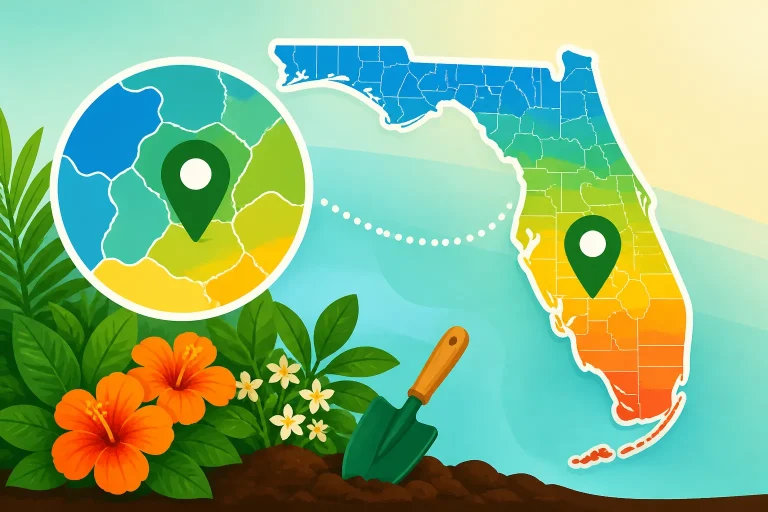
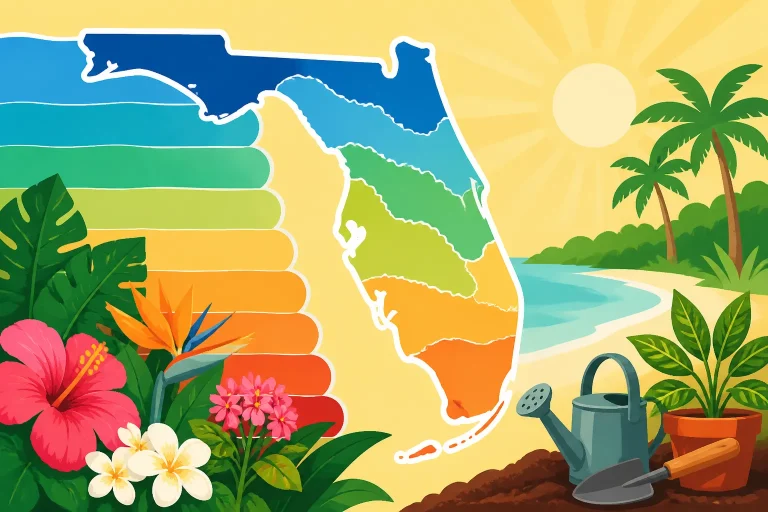
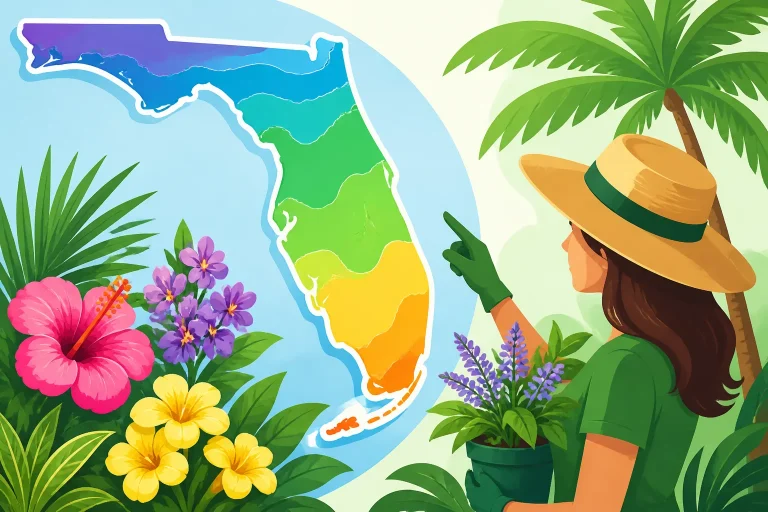
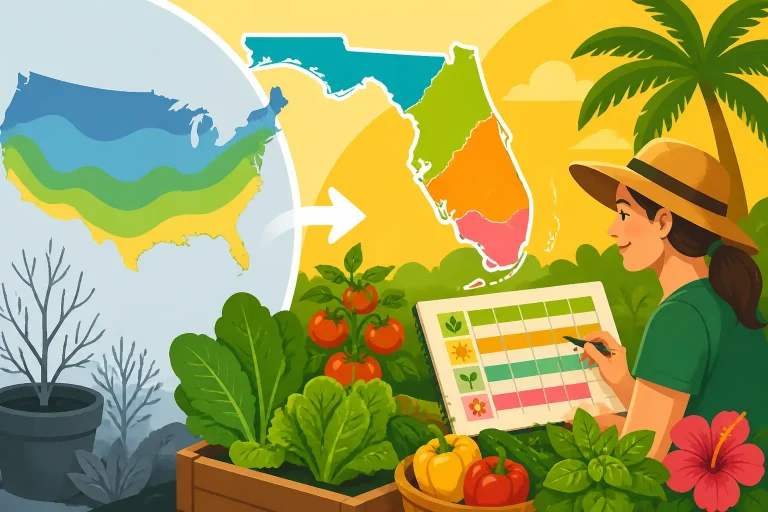
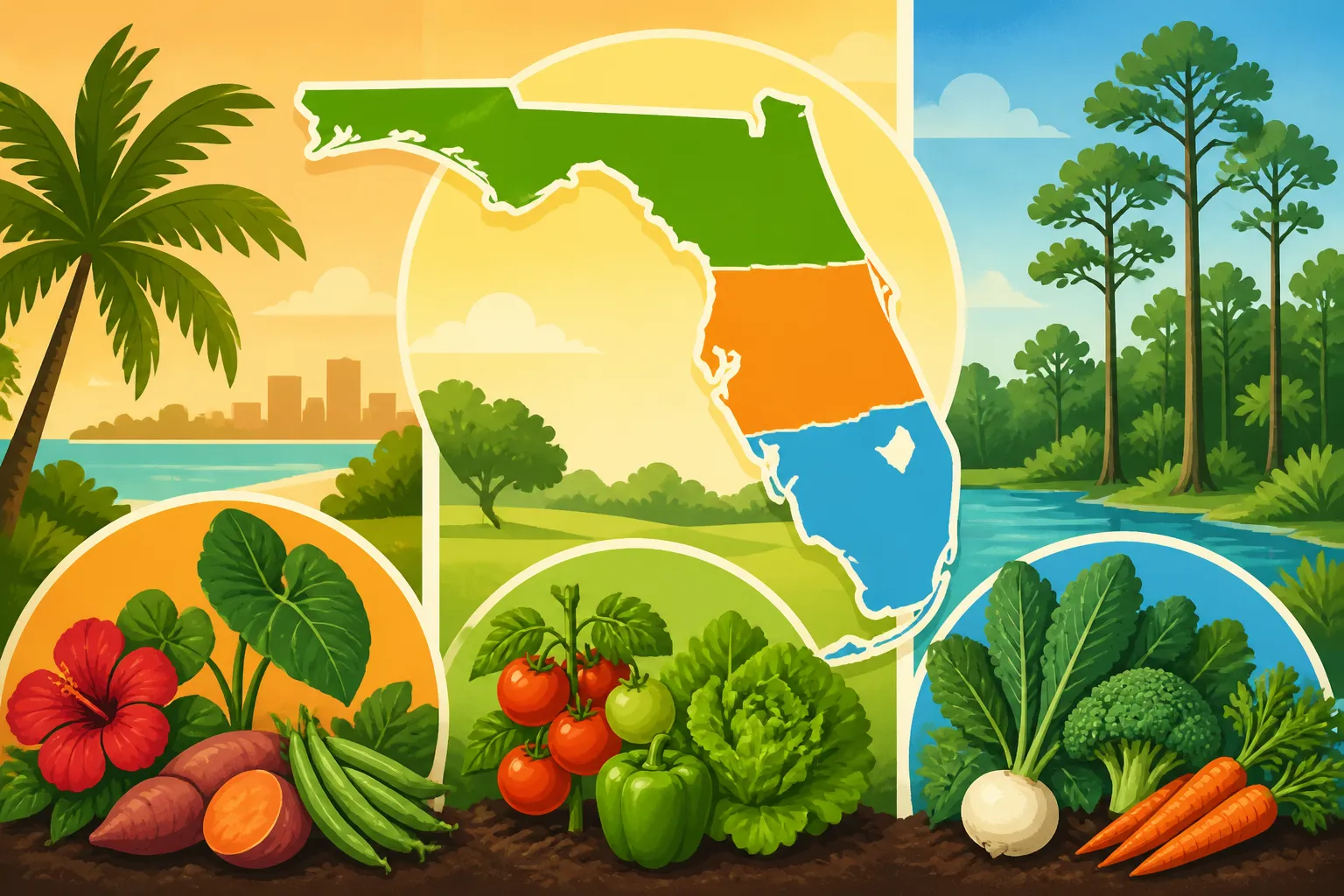
According to the University of Florida, Institute of Food and Agricultural Sciences (UF/IFAS), the Gardening Calendar has separate editions for North, Central, and South Florida. That regional split is the first practical decision: look up your location in the calendar system and use the edition intended for it, rather than choosing a schedule based only on the month or a hardiness-zone label.
If you are not sure which regional calendar applies, begin with North, Central, or South: Finding Your Florida Gardening Map. Then use Reading the UF/IFAS Florida Gardening Calendar by Region to make sense of the calendar entries. A planting calendar is most useful when you treat it as a local starting point, not a guarantee that every crop will succeed in every yard.
For November, check the current month in your regional calendar and note the crops listed for planting. Read the entry closely: a calendar may distinguish between direct sowing, starting seeds, and setting out transplants. Those methods are not interchangeable. A recommendation to transplant a crop does not necessarily mean that sowing its seeds outdoors is equally appropriate at that time.
If you want a broader view of how the monthly schedule fits into the year, see The Florida Gardening Calendar: Month-by-Month Landscape Guide. For vegetable-specific entries, Florida Vegetable Planting Calendar: When to Grow Each Crop can help you locate the crop and compare its recommended timing with the November schedule.
| Your location | Calendar edition to check | Practical next step |
|---|---|---|
| North Florida | North Florida edition | Check the November entry and the planting method listed for each crop |
| Central Florida | Central Florida edition | Compare the listed crops with your yard’s sun, soil, and current conditions |
| South Florida | South Florida edition | Use the regional entry rather than borrowing dates from another part of the state |
The table is a way to organize your search, not a substitute for the calendar’s crop-by-crop recommendations. If an entry is unclear, check the calendar’s surrounding notes and the relevant crop guidance before buying seeds or plants.
How to turn November entries into a planting list
A calendar can offer several possible choices, but it cannot decide what fits your garden. Before you shop, turn the regional entries into a short list of crops you can realistically plant and care for.
Begin by recording the crop names and the method the calendar calls for. Mark each entry as direct-sown, started from seed for later planting, or planted as a transplant if that distinction is provided. Keep any timing notes with the crop name. This prevents an easy mistake: remembering that a crop appears in the November schedule but overlooking the specific method or timing attached to it.
Next, narrow the list to crops that suit the space you have. A recommendation is not useful if the bed is already full, the growing area gets the wrong amount of sun, or the soil stays too wet for the crop you have in mind. Look at the actual planting site, not just the garden plan on paper. Notice where shade falls, where rainwater collects, and how easy it is to reach the bed for sowing, watering, and harvesting.
A simple planning sheet can include:
- The crop listed in your regional calendar
- The planting method shown in the entry
- The part of the garden where you plan to grow it
- Any soil, light, or drainage questions to resolve first
- Whether you have seeds or suitable transplants
- The next step needed before planting
This list helps you separate a calendar recommendation from a purchase decision. You might find that one crop is ready to plant but the bed needs clearing, while another would require a transplant you do not have. It is better to spot those details before you prepare a whole bed or make a large seed purchase.
For a more detailed way to match crop choices and sowing dates with local conditions, see Matching Florida Crops and Sowing Dates to Your Local Region. If you are weighing whether to sow seeds outdoors or start with young plants, When to Direct-Sow, Start Seeds, or Transplant in Florida explains the decision points to consider.
What the regional difference means for your choices
The calendar’s regional editions are useful because a statewide month label does not describe every garden’s growing conditions. The editions direct you to region-specific recommendations; they do not mean that every yard within a region will have identical soil, sunlight, drainage, or exposure.
That is why it is risky to copy a planting list from a friend who gardens elsewhere in Florida or from a general gardening source that does not identify its region. Even if the crop name is the same, the suggested timing or planting method may differ. Use Why Florida Vegetable Timing Relies on Region Over Hardiness for more on why a hardiness-zone label alone does not replace a regional planting schedule.
After you find the right edition, think of your yard as a second layer of local information. A garden bed beside a building may receive different sun and wind exposure from an open bed nearby. A low spot may hold water after rain, while another part of the same yard drains more readily. Trees, fences, nearby paving, and buildings can also affect the growing conditions in a planting area.
These observations should help you decide where to put a crop and whether the site is suitable. They should not be used to replace a regional calendar with a guess. If your yard seems warmer, cooler, wetter, or shadier than nearby areas, note that difference and use it when planning. If the local conditions raise doubts about whether to plant immediately, look for crop-specific guidance or wait until you can confirm the recommendation.
A useful decision sequence is:
- Identify the regional edition that applies to your location.
- Find the November entry for each crop you are considering.
- Check the planting method and any notes associated with the entry.
- Compare the proposed bed with the crop’s site needs.
- Confirm that current weather and soil conditions are suitable before planting.
This approach avoids treating regional advice as if it were a precise prediction for every garden. A calendar helps you choose a reasonable planting window; your yard’s conditions and the weather at planting time still matter.
Choosing between seeds and transplants
The planting method in a calendar entry matters because seeds and transplants begin at different stages. Direct sowing places seed in the garden bed. Starting seeds separately gives young plants time to develop before they are moved outdoors. Transplants are already-established young plants that can be set in a prepared bed. Which method fits depends on the crop and the schedule, so follow the method specified for the crop you have chosen rather than assuming one approach works for everything.
Before direct sowing, prepare the bed so seeds have contact with suitable soil and are not buried under clods, weeds, or thick plant debris. Check the seed packet for its planting instructions, including depth and spacing. Those details vary by crop and product, so do not apply one seed’s instructions to another.
If you are starting seeds separately, plan for the extra care young plants need. Seedlings can be vulnerable to drying out, excessive moisture, rough handling, and abrupt changes in growing conditions. Keep track of which seedlings are which, and make sure you know where and when they are meant to be planted. A tray of unlabelled seedlings is difficult to manage if the plants look similar.
When setting out transplants, check that the plants appear healthy and that the bed is ready. Handle them carefully, avoid leaving roots exposed, and water them in as appropriate for the crop and conditions. A transplant’s presence in a shop does not prove that it is the right choice for your current planting window. Check the regional calendar and crop guidance first.
If your November list includes crops that can be started in more than one way, compare the methods before deciding. Direct Sowing vs Starting Transplants for Florida Garden Crops is useful when you need to choose between sowing outdoors and growing plants separately. For seasonal seed-starting decisions, see Starting Seedlings Indoors Ahead of Florida’s Spring Windows; use that article for its stated subject and confirm any November-specific choice with the current regional calendar.
Whatever method you use, label the planting. Write down the crop name and planting date, and mark where seeds or transplants went. This small step makes it easier to identify seedlings, notice uneven emergence, and keep track of what needs attention. If a bed contains several crops, a simple sketch can be more reliable than trying to remember where each row begins.
Prepare the bed before planting
A calendar entry tells you when to consider planting; it does not mean that a bed is automatically ready. Before sowing or transplanting, inspect the site and resolve practical problems that could undermine the planting.
Clear the space of weeds and spent plants that would compete with the new crop or make it harder to work. Remove debris that obstructs sowing or transplanting, while keeping useful organic material separate if you plan to compost it. If a previous crop left behind signs of disease or pest damage, identify the problem before reusing plant material or moving it around the garden. Diagnosing Plant Damage in Florida: Fungi, Insects, and Weeds can help you think through possible causes before deciding what to do with affected plants.
Check how the soil behaves after rain or irrigation. If water remains standing or the bed feels persistently soggy, pause and investigate drainage before planting. If the surface is dry and loose, check below the surface as well; a dry-looking crust does not always describe conditions where roots will grow. Sandy soil can also change quickly between wet and dry conditions, so consider the whole bed rather than watering or planting based on appearance alone. For related guidance, see Why Florida Sandy Garden Soil Dries Out So Fast.
Avoid adding amendments by habit. More compost, lime, fertilizer, or other material is not automatically better, and the right choice depends on the soil and the crop. If you are unsure what the bed needs, Improving Florida Sandy Soil: Organic Matter and pH Fixes offers background on soil improvement, while Is a Soil Test Worth It Before Planting a Florida Garden? can help you consider whether testing would answer your question. Follow the instructions and recommendations from the relevant product or official source when using any amendment.
Finally, check whether the bed is practical to maintain. Can you reach the planting area without stepping on the growing soil? Can you water it without soaking nearby paths or other plants? Is it exposed to a condition that may need attention, such as heavy runoff, shade, or wind? Addressing access and layout before sowing is easier than trying to change the bed after seedlings emerge.
Use current conditions as a final check
A calendar is a planning tool, not a weather forecast. The November entry helps you narrow down the crops to consider, but conditions in your garden can still affect whether it makes sense to plant on a particular day. Check the local forecast and observe your bed before planting, especially if the weather has shifted or the soil is unusually wet or dry.
If a cold spell is forecast, do not assume that every crop in the calendar has the same tolerance. Check crop-specific guidance and take any recommended precautions. If a stretch of warm or unsettled weather is making you question a planting decision, look for advice that addresses the crop and your region rather than applying a general rule to every bed. How Florida Weather and Yard Microclimates Shift Planting Dates gives more context on how local conditions can affect timing.
Before planting, ask:
- Does the regional calendar list this crop for the current month?
- Does it specify direct sowing, seed starting, or transplanting?
- Is the bed prepared and appropriate for the crop?
- Does the current forecast raise a concern that needs a crop-specific answer?
- Do I have the supplies and time to care for the planting after it goes in?
If the answer to any of these is uncertain, delay the decision long enough to check the relevant guidance. Waiting to verify a planting method or site condition is usually more useful than planting first and trying to correct a preventable problem later.
Once the crop is planted, observe how the bed responds. Check for uneven emergence, drying soil, standing water, and signs of stress. Use what you see to adjust care, but diagnose before applying treatments or making major changes. A problem that looks like a watering issue may have another cause, and a treatment should match the identified problem.
Keep a brief record of what you planted and how it performed. Note whether the regional recommendation matched the conditions in your yard, whether the site worked well, and what you would change next time. That record does not replace the calendar, but it helps you make better choices within your garden’s particular conditions.
Build a planting plan that stays flexible
A productive November plan does not need to fill every bed. Choose crops that appear in the correct regional schedule, fit the space you have, and match the planting method you can manage. A shorter, well-organized planting list is easier to care for than a long list of crops squeezed into unsuitable sites.
You can divide your plan into three practical groups:
- Ready to plant: The regional calendar lists the crop and the bed is prepared.
- Needs preparation: The crop appears in the schedule, but the site, supplies, or planting method needs attention first.
- Needs confirmation: You have a question about timing, weather, crop suitability, or the meaning of the calendar entry.
This keeps a possible crop from being mistaken for an immediate task. It also gives you a clear next step: plant what is ready, prepare what needs work, and verify what remains uncertain.
If you are growing vegetables, compare the November entry with a crop-focused schedule rather than relying on a single general list. Florida Vegetable Planting Calendar: When to Grow Each Crop can help you find crop-specific timing, and Florida Planting Schedules: Sowing by Season and Weather provides another way to think about sowing decisions. For flowers and ornamental plants, use Florida Flower Planting Calendar by Region and Season alongside the regional edition.
Keep in mind that a regional calendar is not a shopping list. You do not need to plant every crop it names. Choose based on the meals, flowers, or garden goals you care about, the space and light available, and the amount of attention you can provide. A crop that fits your schedule and growing site is a better choice than one selected only because it appears in a monthly list.
When the regional schedule and the conditions in your yard seem to disagree, do not resolve the conflict by guessing. Confirm the correct regional edition, read the crop entry again, and consult relevant crop-specific guidance. If the question remains, seek current advice from the appropriate official or local gardening resource. The more specific the question, the easier it is to get a useful answer: include your region, the crop, the planting method, and what you observe in the bed.
Frequently Asked Questions
What should I plant in Florida in November?
Start with the November entries in the regional Gardening Calendar that applies to your location. Check each crop’s planting method and verify that the bed and current conditions are suitable before planting.
Can I use a planting calendar from another part of Florida?
Use the edition for your own region first. A schedule from elsewhere may not match the timing or method recommended for your location.
Does a calendar entry mean I should plant the crop immediately?
Not necessarily. Treat it as a recommendation to consider, then check the entry’s notes, planting method, bed readiness, and current conditions.
Should I use seeds or transplants?
Follow the method listed for the crop in your regional schedule, then check crop-specific instructions. Seeds and transplants are different starting points and are not always interchangeable.
Sources
- University of Florida, Institute of Food and Agricultural Sciences (UF/IFAS) — Florida Gardening Calendar – Solutions for Your Life – University of Florida, Institute of Food and Agricultural Sciences – UF/IFAS (checked November 14, 2026)
- University of Florida, Institute of Food and Agricultural Sciences (UF/IFAS) — Florida Gardening Calendar – Solutions for Your Life – University of Florida, Institute of Food and Agricultural Sciences – UF/IFAS (checked November 14, 2026)
Disclaimer
This article is for general informational purposes only and does not constitute professional advice. Laws, prices and regulations vary by location and change over time. Consult a qualified professional for guidance on your specific situation. Florida Gardening Guide is not a government agency and is not affiliated with any university extension, state department of agriculture or other government agency.