How to Find Your USDA Hardiness Zone in Florida by ZIP Code
A Florida ZIP code can point you toward a USDA hardiness zone, but it cannot tell you everything about what will grow well in your yard. The zone is a useful starting point for comparing plants’ winter cold tolerance. Here’s how to look it up, check whether it fits your location, and combine it with Florida’s regional planting guidance.
What a USDA hardiness zone tells you
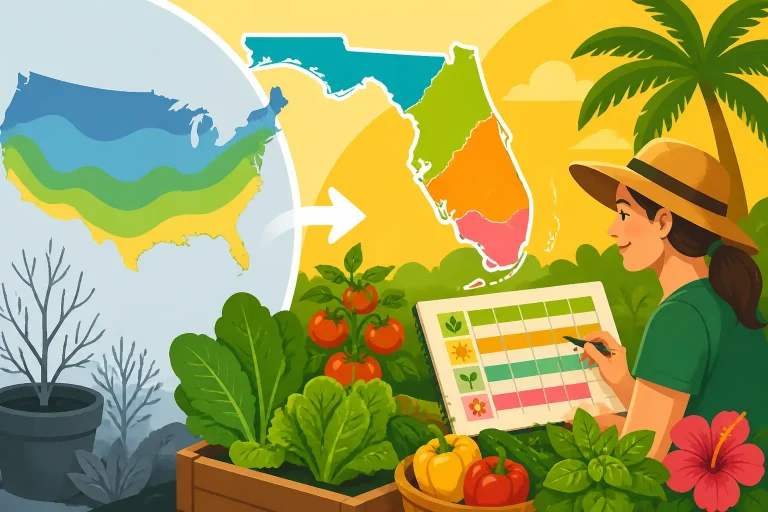
The USDA Plant Hardiness Zone Map groups locations by their average annual extreme minimum winter temperature. In other words, it helps describe the coldest winter conditions a perennial plant is likely to face over time. The map divides temperatures into zones and half-zones, with each step representing a difference in winter cold.
A zone is a measure of long-term climate, not a prediction for a particular winter. A yard in one zone can still experience a colder-than-usual night, and a yard in a cooler zone can have a mild winter. The map is useful for comparing a plant’s cold tolerance with the typical winter lows in a location, but it does not promise that a plant will survive every cold event.
This distinction matters when you use a ZIP code search. The result gives you an estimate based on the mapped area around that location. It does not measure the temperature beside your house, under a tree, or in a low spot where cold air collects.
A hardiness zone also says little about several other conditions that affect garden success:
- Summer heat: The zone does not tell you how well a plant tolerates Florida’s hot weather.
- Humidity and rainfall: It does not describe a plant’s ability to handle wet summers, dry spells, or humid conditions.
- Soil and drainage: It cannot tell you whether your soil drains quickly or stays waterlogged.
- Sun and shade: It does not identify how many hours of sun a specific planting spot receives.
- Planting dates: It is not a vegetable calendar and does not show when to sow or transplant crops.
- Short-term weather: It does not predict the next frost, freeze, or cold snap.
For perennial trees, shrubs, and flowers, a hardiness zone can help screen out plants that are poorly suited to your area’s typical winter minimums. For vegetables, it is one small part of the decision. A crop may tolerate winter temperatures but still struggle with Florida’s summer heat, heavy rain, pests, or a planting window that does not leave enough time to mature.
If you are comparing zone recommendations for a plant, check that they refer to the USDA hardiness zone system rather than another type of climate or heat rating. Then consider whether the recommendation is for the plant itself, a specific cultivar, or a particular stage of growth. A young plant in a pot, for example, may be more exposed to cold than an established plant rooted in the ground.
How to find your Florida hardiness zone by ZIP code
A ZIP code is a convenient place to start. To get the most useful result, treat the lookup as a first estimate and confirm it on the map.
- Open the USDA Plant Hardiness Zone Map. Use the official map rather than relying only on a plant seller’s zone checker or a general search result.
- Enter your Florida ZIP code in the map’s search field. If the map accepts a place name or address as well, you can use those options to narrow the location.
- Read the zone shown for the searched location. The result may include a letter indicating a half-zone. Record the full result rather than only the number.
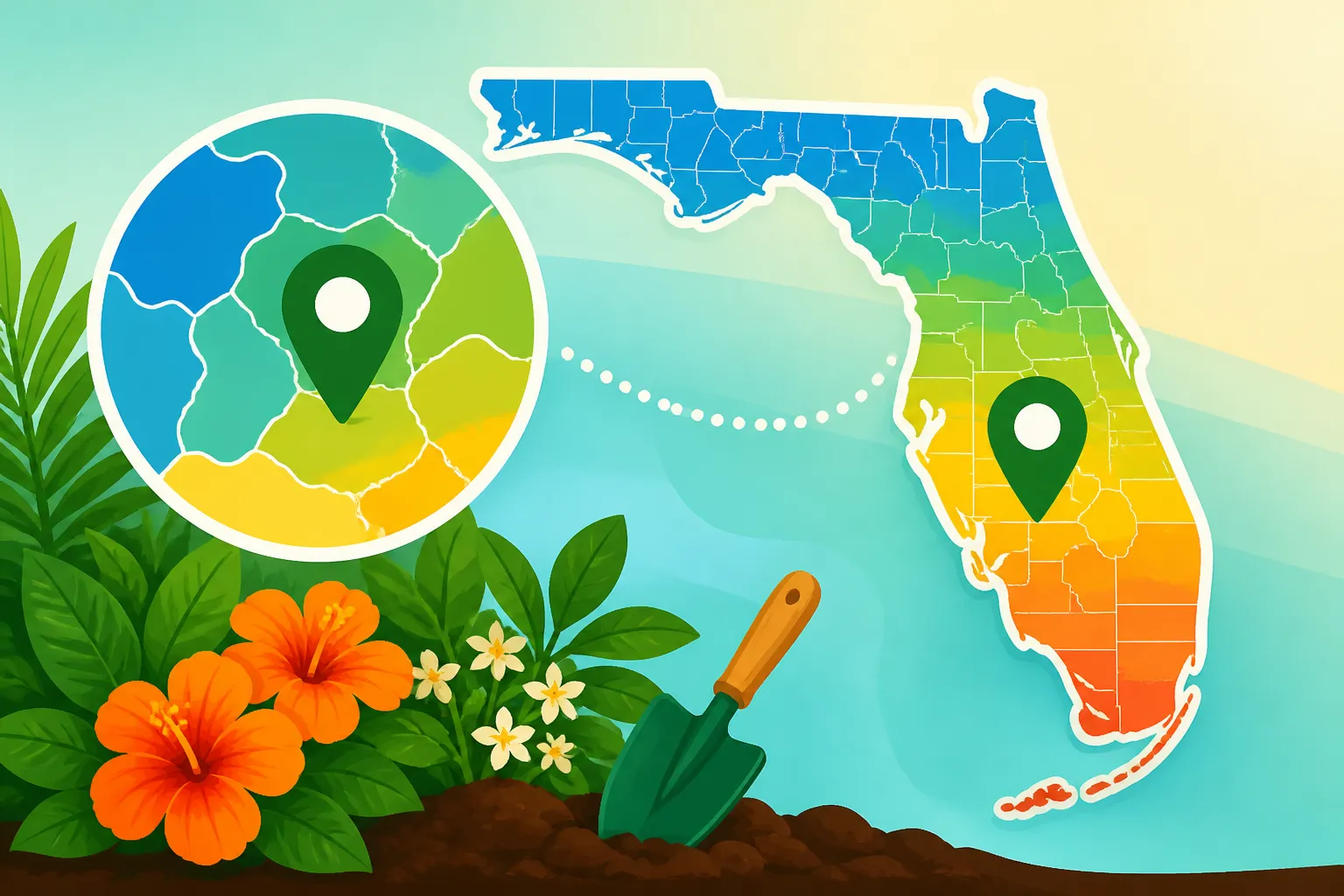
- Zoom in and check the map around the result. Look for changes in color or zone boundaries near the searched point. A ZIP code can cover more than one kind of local landscape.
- Compare the map location with your actual property. Consider whether your home is inland or coastal, exposed or sheltered, on high ground or in a low area, and close to a large body of water.
- Use the zone as a filter, not a planting date. Check the plant’s cold tolerance, Florida regional guidance, and the conditions in your intended planting spot before buying or sowing.
When the search returns a broad or ambiguous location, try a more precise location within the ZIP code if the map allows it. A city name alone may also point to a central location that is not representative of your neighborhood. The key is to inspect the map rather than assume that every property in a ZIP code falls in one exact zone.
Keep a note of the zone you found and the location used for the lookup. If you later compare a plant label, nursery listing, or garden reference, make sure the recommendation uses the USDA map and the same kind of zone notation. A listing that says only “zone 9,” for example, may not provide enough detail if the map distinguishes between half-zones.
For a closer look at how zone results fit together across the state, see Florida Planting Zones: Choosing Plants Adapted to Your Zone. If you want to understand the map itself before relying on its result, Using the USDA Plant Hardiness Zone Map for Florida Yards covers how to read it in a Florida landscape context.
How to read the zone and half-zone result
The number is the broad zone, while the letter, when shown, identifies a half-zone within it. The two parts belong together. If a lookup gives a result such as a numbered zone followed by “a” or “b,” keep both when you compare it with plant information. The half-zone provides a more detailed temperature range than the number alone.
| What you see on the map | What it means | How to use it |
|---|---|---|
| A zone number | A range of average annual extreme minimum winter temperatures | Use it as a broad check against a plant’s stated cold tolerance |
| A zone number with “a” or “b” | A half-zone that refines the temperature range | Keep the letter when comparing recommendations |
| A colored region around a ZIP result | The map’s estimate for an area, not a reading from your yard | Zoom in and consider nearby boundaries and local conditions |
| A boundary near your property | A transition between mapped temperature ranges | Avoid treating the line as a sharp temperature change in every garden |
| A plant label listing several zones | A suggested hardiness range for that plant or cultivar | Check the full range and consider heat, moisture, soil, and exposure too |
A zone boundary is not a fence that suddenly changes the climate. The map represents temperature patterns over a broad area. Small differences in elevation, proximity to water, exposure to wind, and the arrangement of buildings and vegetation can make two nearby spots behave differently during a cold night.
Do not assume that the warmer-looking zone is always the better guide for a plant. If a plant is marginally cold-tolerant, a sheltered spot may help, but a warm pocket cannot guarantee protection during an unusual freeze. Likewise, a garden in a cooler mapped zone may have a protected area where a plant performs better than the map alone suggests.
When a plant’s listed range overlaps your result, the zone is a useful sign that the plant may be worth considering. It is not a guarantee of performance. Look for information about the plant’s needs and local suitability, including whether it can handle Florida heat, humidity, rainfall, and the soil conditions where you plan to grow it.
If you are comparing older garden notes with a current map, check the map version before drawing conclusions. Maps can be updated as long-term temperature records change. A reported shift in a mapped zone does not mean that a yard has stopped experiencing freezes or that every plant suited to a warmer zone will thrive there.
Why a ZIP code may not match your yard
A ZIP code is designed to identify an area for mail delivery, not to describe the climate of every garden within its boundaries. Depending on its size and geography, a ZIP code may include neighborhoods with different distances from the coast, elevations, drainage patterns, and exposure to wind.
The USDA map also has a set scale. It can show broad patterns in winter minimum temperature, but it cannot represent every sheltered courtyard, open field, low-lying garden, or narrow strip of land beside the water. A zone result attached to a ZIP code is best understood as a starting point for checking the mapped area, not a precise measurement at a particular home.
Look for local cold pockets
Cold air can settle in low areas, especially on calm nights. A low spot in the yard may be colder than a nearby slope or raised area. Fences, dense vegetation, walls, and buildings can also change how wind moves or how much warmth is retained overnight. These effects are local, and their direction can vary with the site.
Coastal locations may experience different temperature patterns from inland ones. A nearby body of water can influence how quickly temperatures change, but exposure, wind, and the exact shape of the shoreline matter. Do not assume that all coastal yards are protected from cold or that all inland yards have the same risk.
Use the map at a useful scale
When a zone boundary appears near your ZIP code, zoom in far enough to inspect the pattern around your neighborhood. Compare the map’s location marker with the land around your home. If your property sits close to a boundary, it is sensible to treat the result cautiously rather than choosing a plant based on the warmer side alone.
This is especially important if you are planting a tree or shrub that will stay in place for many years. A small difference in winter minimums may matter for a plant near the edge of its recommended range. Consider whether you can protect a young plant, whether the site is exposed, and how much risk you are willing to accept if a severe cold event damages it.
For a deeper look at why yards can differ from the mapped result, read When Local Florida Microclimates Outweigh Mapped Zones. The practical point is simple: the zone describes a regional pattern, while a garden’s actual conditions depend on its location and layout.
Why Florida planting dates need more than a hardiness zone
Florida gardeners often need a calendar that accounts for the state’s varied growing conditions, not just winter cold tolerance. A hardiness zone may help you decide whether a perennial is likely to cope with typical winter minimums, but it does not tell you when to plant vegetables.
Florida’s gardening conditions vary from north to south and also from inland areas to coastal locations. The season when a crop can grow successfully may depend on heat, rainfall, cold risk, and the time a plant needs to mature. Two gardeners who get similar hardiness-zone results may still have different planting windows because their weather patterns and garden sites differ.
This is why a ZIP code zone lookup should not be used to decide whether it is time to sow tomatoes, beans, greens, or other vegetables. A crop’s best planting period is related to its preferred growing temperatures and the local season. The zone map is centered on winter minimums, so it does not answer those questions on its own.
Use a Florida planting calendar or regional schedule to decide when to plant, then use the USDA zone as one check for plants that need to survive winter outdoors. Beyond USDA Zones: Using Regional Florida Garden Calendars explains why a zone map and a regional calendar answer different questions. For more on the differences among Florida growing regions, see North, Central, or South: Finding Your Florida Gardening Map.
A calendar is still a guide rather than a promise. Weather varies from year to year, and a planting window can shift with local conditions. Pay attention to forecasts, soil moisture, and the condition of your garden beds. If a cold event is forecast, follow advice that addresses the specific risk rather than relying on the long-term zone result. How to Protect Florida Garden Beds Ahead of an Overnight Freeze can help with that separate task.
Match the tool to the question
| Your question | Best starting point | What the zone map cannot answer |
|---|---|---|
| Can a perennial tolerate typical winter lows here? | USDA hardiness zone and the plant’s stated range | Whether it will thrive in heat, humidity, or local soil |
| When should I sow a vegetable? | A Florida planting calendar for your region | The best date for sowing or transplanting |
| Is a cold night likely soon? | A local forecast and freeze guidance | The next night’s weather |
| Will a plant suit a sunny, wet bed? | Site conditions and plant-care information | Sun exposure, drainage, or soil moisture |
| Does my yard have a colder spot than nearby areas? | Observation of the property and local microclimate | Exact temperatures at every point in the yard |
Thinking in terms of questions helps prevent a common mistake: asking one map to do several jobs. The hardiness zone is a cold-tolerance reference. A planting calendar helps with seasonal timing. A forecast helps with immediate weather decisions. Soil, sun, and drainage information help match the plant to the site.
How to use your zone when choosing Florida plants
Once you have a zone result, use it as an early screening tool. Check the plant’s recommended hardiness range and compare it with the full zone result for your location. If your result falls outside the stated range, the plant may be vulnerable to winter cold. If it falls inside the range, that only means winter minimums may be suitable; it does not establish that the plant is a good fit for the rest of Florida’s conditions.
For a long-lived landscape plant, weigh several factors before choosing it:
- Winter cold tolerance: Does the plant’s recommended range include your result?
- Summer conditions: Can it tolerate the heat and humidity at your site?
- Water needs: Does it suit the rainfall pattern, irrigation options, and drainage?
- Light: Does the planting area provide the sun or shade the plant needs?
- Soil: Can the plant grow in the soil you have, or would a container or raised bed be more suitable?
- Space and upkeep: Can the plant mature without crowding paths, structures, or nearby plants?
- Local suitability: Is the plant appropriate for the Florida region where you live?
For a perennial or tree that is near the edge of its cold tolerance, choose the planting location carefully. A well-drained, protected site may be preferable to a low, exposed area, but do not rely on a favorable microclimate as a guarantee. If losing the plant would be costly or difficult, a more cold-tolerant choice may be the safer option.
For plants grown in containers, consider that their roots are more exposed to temperature changes than roots in the ground. A container can be moved or sheltered when conditions call for it, but it can also dry out or heat up more quickly. A hardiness-zone match does not remove the need to manage water, light, and cold exposure.
When choosing vegetables, start with regional planting guidance rather than the zone result. A vegetable may be suitable for a season but not another. It can also be possible to grow a crop during part of the year and have it fail when heat or heavy rain arrives. The right calendar helps you plan around those seasonal limits. Florida Vegetable Planting Calendar: When to Grow Each Crop is a useful companion for crop timing, while How Florida Weather and Yard Microclimates Shift Planting Dates covers why local conditions can affect a schedule.
If your main goal is to plan an entire garden year, use a month-by-month resource alongside the zone lookup. The Florida Gardening Calendar: Month-by-Month Landscape Guide can help put seasonal tasks in context. For vegetables, Why Florida Vegetable Timing Relies on Region Over Hardiness is a useful reminder that a hardiness zone does not replace a regional crop schedule.
Common zone-lookup mistakes and how to avoid them
Treating the ZIP result as an exact yard reading
The map gives a regional estimate, not a thermometer reading from your property. If the result is close to a boundary, inspect the map more closely and think about local conditions. Do not assume every garden within the ZIP code has the same winter exposure.
Using the number but ignoring the letter
If your result includes a half-zone, keep it when comparing plant recommendations. Dropping the letter can make a close comparison less useful. It is also worth checking whether a plant listing gives a full range or only a broad zone number.
Assuming a warmer zone means no more freezes
A warmer zone still includes the possibility of cold events. The zone represents a long-term average of extreme minimum temperatures, not the lowest temperature that can ever occur. A warmer map color does not mean tender plants can be left unprotected in every cold snap.
Using hardiness zones to time vegetable sowing
The USDA map is designed to describe winter cold tolerance. It is not a Florida vegetable calendar. Check regional planting schedules for sowing and transplanting windows, and adjust your plans to current conditions where appropriate.
Confusing winter hardiness with summer performance
A plant can be able to survive winter and still struggle in summer heat, humidity, heavy rain, or poorly drained soil. Read about the plant’s growing requirements, not just its minimum zone rating.
Treating a map update as a guarantee of a warmer garden
A revised zone label reflects changes in the long-term mapped pattern. It does not eliminate unusual cold or change the physical conditions of a particular yard. A zone shift can inform plant selection, but it should not be the only reason to take a risk on a marginal plant.
Choosing plants by zone alone
Before buying, check whether a plant is suitable for your region and the site where it will grow. A plant that matches the zone but needs a different light level, soil, or moisture pattern can still struggle. Local Florida guidance can help narrow the choices. Florida Growing Zones: Planting by Hardiness Range provides another way to think about plant selection, while Planning Your Year Around Florida Growing Seasons and Cold Risks connects seasonal plans with the possibility of cold weather.
A useful decision process is to look up the zone, compare the plant’s stated cold tolerance, check Florida-specific growing needs, and then evaluate the intended site. If any one of those checks raises a concern, consider a different plant or a more suitable location.
Frequently Asked Questions
Can I use my ZIP code to find my exact Florida hardiness zone?
A ZIP code can give you a useful estimate, but it does not identify the exact temperature conditions of every yard in that area. Check the USDA map around your location and account for local features such as low spots, exposure, and nearby water.
Does my USDA zone tell me when to plant vegetables in Florida?
No. The USDA hardiness zone describes long-term winter cold patterns. Use a Florida planting calendar or regional schedule to choose vegetable sowing and transplanting windows.
If a plant is rated for my zone, will it grow well in my yard?
Not necessarily. A zone match is a check on winter cold tolerance. The plant also needs suitable heat, light, soil, drainage, and moisture, and its needs should fit your region and the garden site.
Can a warmer zone still have a freeze?
Yes. A zone is based on long-term temperature patterns, not a promise about an individual winter or night. Check local forecasts when cold weather threatens, even if your ZIP code lookup shows a warmer zone.
Disclaimer
This article is for general informational purposes only and does not constitute professional advice. Laws, prices and regulations vary by location and change over time. Consult a qualified professional for guidance on your specific situation. Florida Gardening Guide is not a government agency and is not affiliated with any university extension, state department of agriculture or other government agency.