Florida Planting Zones: Choosing Plants Adapted to Your Zone
Florida planting zones can help narrow down which plants are likely to tolerate local winter cold, but a zone alone cannot tell you what to plant or when. Florida gardeners also have to account for regional weather, sandy soil, heat, pests, and conditions in the yard itself. The practical approach is to use a zone as a starting point, then match plants to the site and season.
What a Florida planting zone tells you
A plant’s hardiness zone is a useful clue about whether it can survive the coldest winter conditions typical of an area. It is not a complete measure of a plant’s suitability, and it is not a planting calendar. A plant that can tolerate local winter cold may still struggle with heat, wet soil, drought, pests, or a poorly matched growing season.
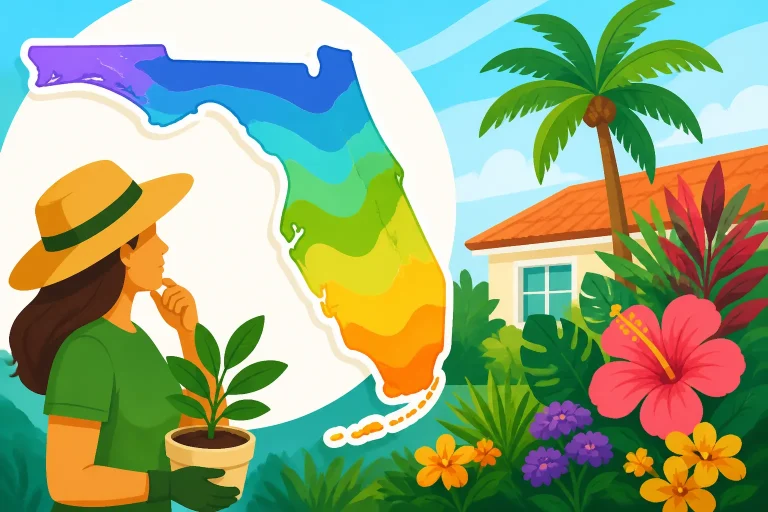
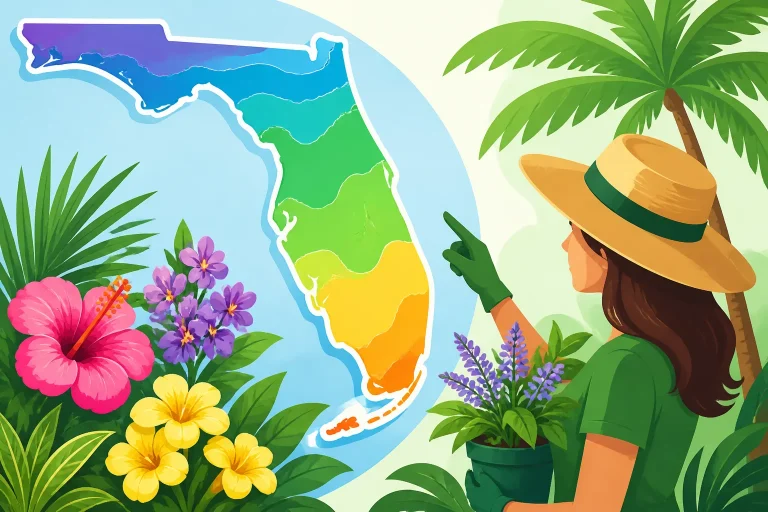
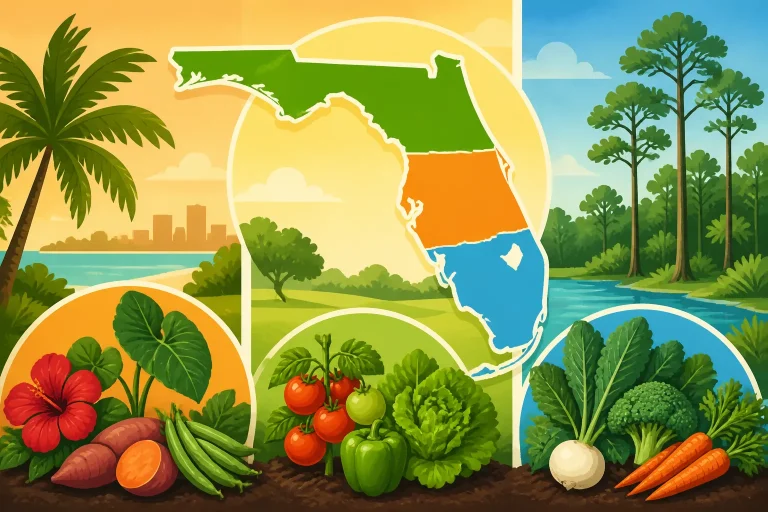
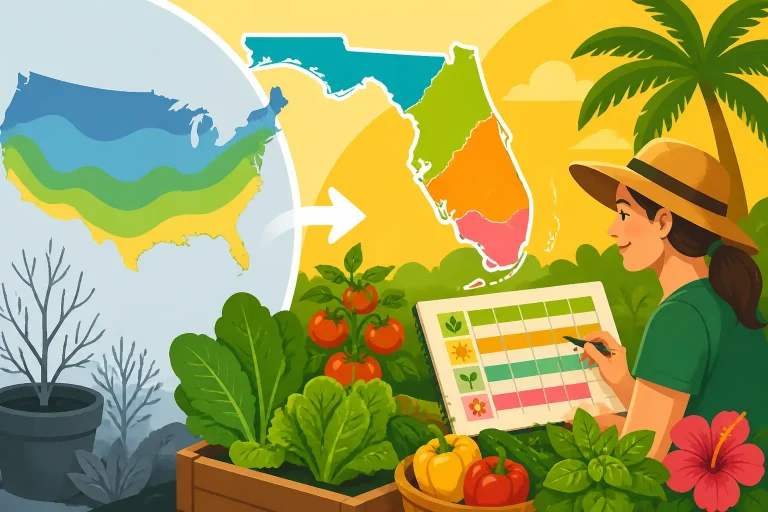
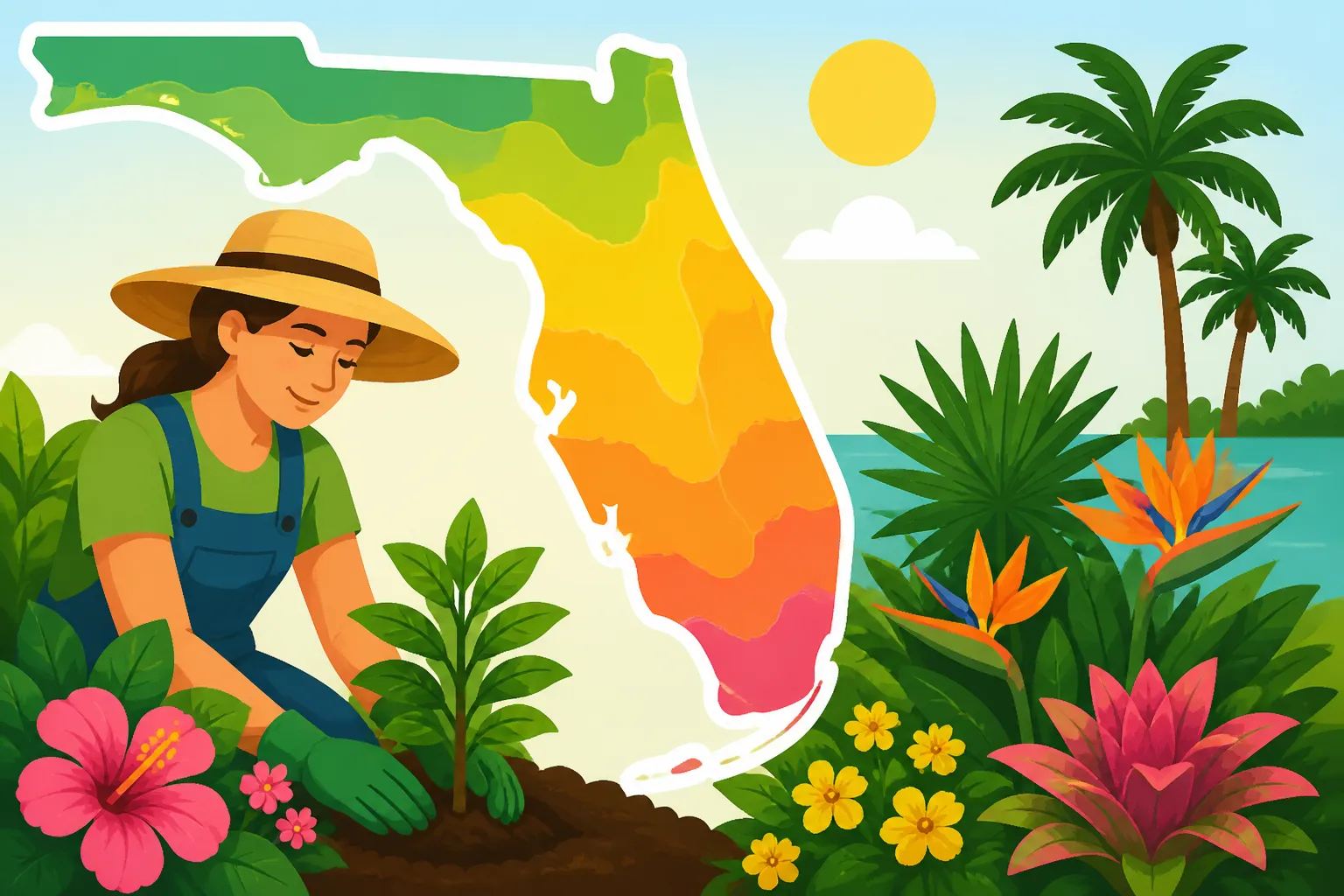
According to the University of Florida, Institute of Food and Agricultural Sciences (UF/IFAS), Florida has four different growing zones. That broad range is a reminder that advice suited to one part of the state may not fit another. A plant that is comfortable with conditions in a warmer area may be vulnerable to cold farther north, while a plant selected for winter tolerance may not be the best choice for a hot, humid site.
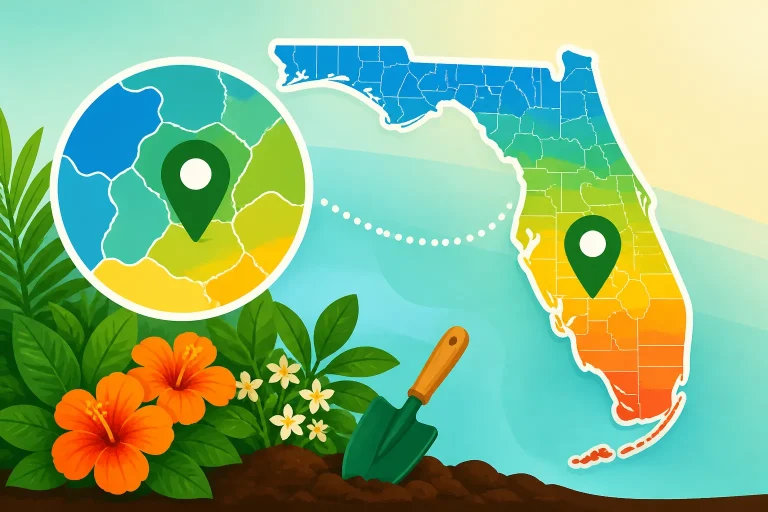
The USDA Plant Hardiness Zone Map can help you compare a plant’s cold tolerance with the winter conditions expected in your area. If you are unsure how to locate your area on the map, How to Find Your USDA Hardiness Zone in Florida by ZIP Code can help with that step. For an explanation of what the map does and does not tell you, see Using the USDA Plant Hardiness Zone Map for Florida Yards.
Hardiness is about cold tolerance
Think of hardiness as a filter, not a verdict. If a plant is not suited to the winter cold where you garden, it may be a poor long-term choice unless you can protect it or grow it in a container that can be moved. If it is suited to the local cold, that only means it has passed one important test. It still needs suitable light, soil, drainage, moisture, and care.
A map zone also cannot predict what will happen in a particular winter. Cold conditions vary, and a sheltered garden bed can behave differently from an open, exposed yard. A plant may survive most winters yet be damaged during a colder spell. Conversely, a sheltered location may offer more protection than the surrounding area.
A zone is not a planting date
Hardiness zones are often treated as if they tell gardeners when to sow seeds or set out plants. They do not. A zone is mainly useful for assessing winter cold tolerance; planting windows depend on seasonal weather and crop needs.
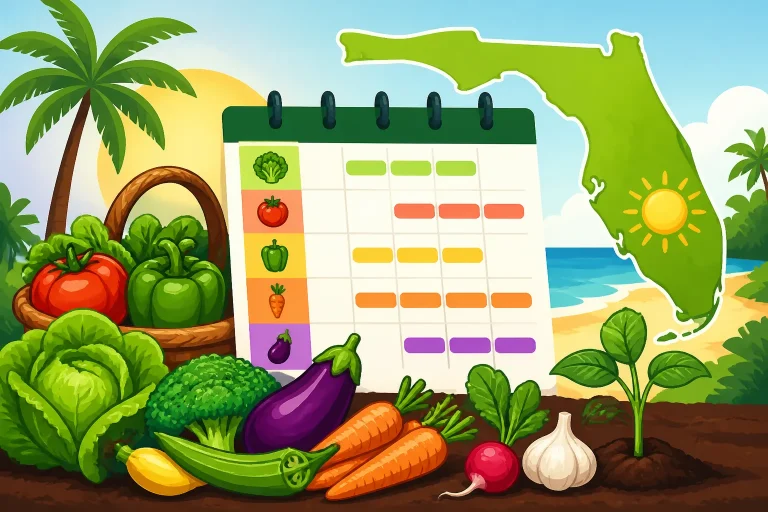
Vegetables make the distinction especially clear. The best time to sow a crop depends on whether it prefers cooler or warmer growing conditions, how long it takes to mature, and how the local season is unfolding. A zone alone cannot answer those questions. Why Florida Vegetable Timing Relies on Region Over Hardiness explains why regional timing matters for vegetable gardens.
For a broader look at how zones and local planting guidance fit together, read Florida Planting Zones: Choosing Plants Adapted to Your Zone alongside Beyond USDA Zones: Using Regional Florida Garden Calendars. A calendar can help you plan for seasonal windows, while the zone helps you assess cold tolerance.
Look beyond the map to your actual yard
The map gives a regional overview. Your garden is a specific place with its own light, drainage, exposure, and surrounding plants. Before choosing what to grow, take a close look at those conditions. A plant that is suited to the general area may still fail in a spot that stays soggy, receives intense afternoon sun, or is exposed to cold air moving across an open lawn.
Notice sunlight and shade
Track how light moves across the yard before buying plants. A spot that looks sunny during a quick visit may spend much of the day shaded by a building or tree. Other places may receive direct sun when the day is hottest. These differences affect flowering, growth, water needs, and the range of plants that are likely to thrive.
Pay attention to changes across the seasons, too. A deciduous tree can cast a different pattern of shade when it has leaves than when it is bare. A bed near a wall may also receive reflected heat. If a plant’s light preference is a close match to the available conditions, it has a better chance than one placed in a site chosen only because it is convenient.
For bed placement, Placing Florida Garden Beds for Daily Sun and Easy Water offers a useful planning framework. When shade shifts or varies across a yard, When Florida Yard Microclimates Outweigh Mapped Zones can help you think through how a small site differs from the broader map.
Watch where water goes
Notice where water stands after rain and which areas dry quickly. Waterlogged soil can stress roots, while a raised or exposed area may dry sooner than nearby ground. A plant suited to the local hardiness zone can still struggle if its roots remain wet or if the bed dries faster than the plant can tolerate.
Avoid assuming that the whole yard has the same drainage. A low patch, compacted area, or bed beside a paved surface may behave differently from a gently sloped or mulched planting area. Before investing in plants, observe the site during ordinary wet and dry conditions. The goal is not to make every spot identical; it is to choose plants that fit the conditions already there.
Florida’s sandy soil can also affect how quickly a planting area loses moisture. If the soil in your yard seems to dry rapidly, Why Florida Sandy Garden Soil Dries Out So Fast explains why that can happen. For options that compare planting in the ground with using a raised bed, see Gardening in Florida Sandy Soil: Amending Ground vs Raised Beds.
Find sheltered and exposed spots
Buildings, fences, tree canopies, and other landscape features can change how much wind and cold a plant experiences. A protected location may suit a more sensitive plant better than an open site, but shelter is not a guarantee against cold injury. A sunny wall may also create extra heat, which can be a disadvantage for a plant that prefers cooler conditions.
Look for recurring patterns: where cold air seems to settle, which areas receive strong wind, and where tender growth is most exposed. The same yard may include a warm, protected patio and a more exposed bed. Treat those as different planting sites rather than expecting a single zone label to describe them fully.
Choose plants for climate, site, and upkeep
A good plant choice fits more than a map. Consider whether the plant can handle local winter conditions, whether it suits the amount of sun and moisture available, and whether you can provide the care it needs. A plant that matches the yard is usually easier to maintain than one that depends on constant correction.
| What to compare | What to check | Why it matters |
|---|---|---|
| Cold tolerance | Whether the plant is suited to winter conditions in your area | Helps reduce the chance of recurring cold damage |
| Seasonal fit | Whether the plant grows best in the conditions expected during its growing period | Helps avoid planting at a time that does not suit the crop |
| Sun exposure | The actual light pattern in the intended spot | Influences growth, flowering, and moisture needs |
| Soil and drainage | Whether the site drains quickly, slowly, or unevenly | Roots need conditions suited to the plant |
| Heat and humidity | Whether the plant can cope with the local growing environment | Winter hardiness does not guarantee summer performance |
| Pest pressure | Whether the plant is likely to need close monitoring | Helps set realistic expectations for maintenance |
| Available care | The time and resources you can provide | A suitable plant should fit your routine as well as your yard |
Start with the conditions you can offer
Make a short description of the site before choosing plants: sunny or shaded, dry or consistently moist, open or sheltered, and in-ground or container. Add any practical limits, such as whether you can water during dry spells or move a pot when conditions change. These notes help narrow choices more usefully than browsing by appearance alone.
Read plant labels and descriptions for their preferred conditions, not just their hardiness. If information is unclear, ask a knowledgeable local nursery or county extension office for help identifying plants that suit your area and site. For landscape planting, Choosing Garden Plants for Florida Sunlight and Soils can help connect those site conditions with plant selection.
A plant’s mature size matters as well. A small plant in a nursery container may eventually shade neighboring plants, press against a walkway, or become difficult to maintain. Think about the space it will occupy as it grows, and avoid crowding it into a location where pruning would become the main way to keep it in place.
Choose locally appropriate plants with realistic expectations
Native and regionally adapted plants can be useful starting points, but “native” does not mean that every plant will thrive in every Florida yard. A native plant still has preferences for light, moisture, drainage, and soil. A species adapted to one local habitat may be a poor match for a dry, exposed bed or a wet, shaded corner.
Likewise, a plant commonly sold in local shops is not automatically right for every site. Check its needs and consider whether it is appropriate for the area before buying. Florida Planting Zones: Choosing Plants Adapted to Your Zone can support the zone-selection process, while How to Verify If a Flowering Plant Is Native to Your Florida County is relevant when you are checking whether a plant is native to a particular area.
Be cautious with plants that are described as low-maintenance without explaining what that means. A plant may need little pruning but still require careful watering while it establishes. Another may tolerate dry conditions after its roots are established but struggle in a wet bed. Look for details about ongoing care rather than relying on a single broad label.
Decide whether a container solves a site problem
Containers can make it easier to adjust a plant’s location, improve drainage, or protect a sensitive plant during difficult conditions. They are not automatically easier than in-ground planting. Potting mix can dry out or become waterlogged, and the container itself changes how roots experience heat and moisture.
Use containers when they offer a clear advantage, such as allowing you to move a tender plant to a sheltered spot or keep a plant separate from unsuitable ground soil. Match the container and growing medium to the plant, and monitor moisture closely. For more on choosing plants for limited outdoor spaces, see Balcony and Patio Container Plants for Florida Spaces.
Use regional calendars to plan planting time
Once you have a likely plant choice, check whether the season suits it. Florida’s broad climatic range means that a calendar for one part of the state may not be appropriate elsewhere. Gardening guidance is more useful when it reflects local conditions and the kind of plant you intend to grow.
For vegetables, distinguish between cool-season crops and warm-season crops. Each has a preferred range of growing conditions, and the planting window is shaped by how the season develops in your region. A seed packet or plant label can describe a crop’s needs, but local planting guidance can help translate those needs into a suitable window.
What to Plant This Month Across Florida’s Three Gardening Regions is a practical starting point for a broad seasonal overview. For crop-specific timing, Florida Vegetable Planting Calendar: When to Grow Each Crop can help you narrow the choices. If you are making a vegetable plan for the full year, The Florida Gardening Calendar: Month-by-Month Landscape Guide adds wider seasonal context.
Treat dates as guides, not guarantees
A calendar is a planning aid, not a promise that weather will cooperate. Conditions shift from year to year, and a warm spell or cold snap can affect how a planting performs. Check the forecast and local guidance before acting, especially when a plant is sensitive to cold or heat.
Also check whether the calendar is intended for your region and crop. A general Florida calendar may be less useful than guidance that distinguishes northern, central, and southern areas. If the recommendation feels different from what you see in the yard, consider whether your location is inland, coastal, sheltered, exposed, or unusually shaded. How Florida Weather and Yard Microclimates Shift Planting Dates explores those local influences.
Plan around the growing conditions, not just the month
The same month can present different gardening conditions in different parts of Florida. Instead of relying on a date alone, ask whether the soil and weather are suitable for the plant’s needs. For vegetable seeds, that may mean waiting for more suitable soil conditions. For a landscape plant, it may mean choosing a period that supports establishment rather than placing a newly planted shrub into stressful conditions.
If you are planning a vegetable bed, think about the whole crop cycle. A crop needs conditions that support germination or establishment, steady growth, and harvest. If it is planted too late for its preferred season, the plant may face stress before it matures. Planting Early Enough for Vegetables to Mature Before Extreme Heat explains why the end of a crop’s season matters as much as the start.
Account for soil, water, and pests
Plant choice is only part of the job. Florida gardeners also have to manage soil and moisture conditions that can make a suitable plant difficult to grow. Sandy soil and numerous insects and other pests can make gardening challenging for new residents and first-time gardeners, so set expectations around monitoring and gradual improvement rather than expecting every plant to thrive without adjustment.
Check soil conditions before changing the bed
Do not assume that adding amendments will solve every soil problem. First observe how the site drains and how the plants respond. If you need more information about soil conditions, follow guidance from the appropriate local extension office or testing service. Testing can inform decisions, but the results should be interpreted in context: different plants may have different preferences.
If an area has poor drainage, repeatedly adding water or placing moisture-sensitive plants there may make the problem worse. If the soil dries quickly, a plant that prefers consistent moisture may need a different site or more attentive care. Improving Florida Sandy Soil: Organic Matter and pH Fixes covers the role of soil amendments, while Is a Soil Test Worth It Before Planting a Florida Garden? can help you consider whether testing would be useful.
Avoid treating the entire yard as though it has a single soil condition. A garden bed, lawn edge, and container may each behave differently. Make changes to the specific area where they are needed, and check whether those changes suit the plants you want to grow.
Water according to the plant and the site
Water needs depend on plant type, soil, exposure, and establishment. Newly planted material may need closer attention than established plants, but the right approach varies. Check the soil and the plant rather than following a rigid routine that ignores rain or changes in weather.
Watering too little can stress roots; watering too often can leave roots short of air in poorly drained soil. Watch for signs of stress, but do not assume that wilting always means the plant needs more water. Heat, root problems, disease, and other conditions can create similar symptoms. When a plant looks unhealthy, check soil moisture and drainage before changing your watering routine.
For practical advice on moisture checks in garden beds, see Checking Soil Moisture Before Turning on Garden Irrigation. If you are establishing new landscape plants, Watering New Florida Transplants and Tapering Off Irrigation focuses on the transition from initial care to a lighter routine.
Monitor pests before deciding how to respond
Insects and other pests are part of the conditions Florida gardeners need to consider. A few damaged leaves do not necessarily mean that a plant is doomed or that immediate treatment is needed. Identify what is causing the damage, how much of the plant is affected, and whether the problem is continuing before choosing a response.
Different pests leave different patterns of damage, and some symptoms can be confused with drought, nutrient issues, or disease. Check the plant regularly, especially when it is young or stressed. If identification is uncertain, seek advice from a county extension office or another qualified local source before treating.
If a pesticide is appropriate, follow its product label, which is the legal instruction for use. Do not choose a product simply because it is marketed for a broad group of pests; confirm that it is labeled for the plant and problem involved. Managing Garden Pests and Beneficial Pollinators in Florida offers more context on identifying garden problems and considering beneficial insects.
Build a planting plan that can change
A useful planting plan should be specific enough to guide decisions but flexible enough to respond to weather and what you learn about the yard. Instead of filling every bed immediately, start with plants that clearly match the site. Observe how they establish and use that information before expanding or replacing anything.
Keep a simple site record
Write down where each plant is placed, how much light it receives, how water drains nearby, and what happens during stressful weather. A brief record can reveal patterns that are easy to miss while focusing on individual plants. For example, repeated damage in the same exposed corner may point to a site issue rather than a problem with a particular plant.
Note what works as well as what fails. A plant that grows steadily with little adjustment may be a stronger choice for that bed than a more demanding plant with similar appearance. Over time, this record becomes more useful than a general description of the property as sunny, shady, wet, or dry.
Try plants in appropriate locations before repeating them
When you are uncertain whether a plant suits a site, avoid committing the whole bed to it immediately. Give it a suitable location and observe its response. If it struggles, check the growing conditions before deciding that the plant itself is unsuitable. The cause may be poor drainage, too much exposure, a planting-time mismatch, or pest damage.
This approach is especially helpful for new residents who may not yet know how a yard behaves across the seasons. It also reduces the risk of making several changes at once and being unable to tell which change helped.
Keep the garden manageable
A garden is easier to maintain when its plants have similar needs and the beds are accessible for watering, weeding, and inspection. Grouping plants by light and moisture preferences can reduce the need to compensate for mismatched conditions. Leave enough room to reach plants and observe their leaves and stems.
Be realistic about how much care you can provide. If a plant needs frequent monitoring or protection that does not fit your schedule, choose a more suitable alternative. The strongest planting plan is not necessarily the most varied; it is the one that fits the site and can be maintained consistently.
Revisit choices as the yard changes
Trees grow, shade shifts, drainage patterns can change, and nearby construction may alter light or exposure. A planting choice that used to work may become less suitable as the site changes. Reassess problem areas rather than repeatedly replacing plants with the same kind.
When an established plant declines, consider the full set of conditions: winter exposure, heat, soil moisture, drainage, light, and pests. Changing the plant may help, but correcting a site mismatch can be more effective. Why Neighborhood Soil and Sun Alter Your ZIP Code Planting Date offers more on the gap between a map-based estimate and the conditions in a particular yard.
A practical way to use planting zones
Use the zone to screen for winter hardiness, then make the decision with local conditions in mind. Check the plant’s light, moisture, soil, and seasonal preferences. Consult a regional planting calendar for timing, and observe the yard for exposure and drainage patterns that a map cannot show.
A simple decision sequence can keep the process focused:
- Locate the garden area on the USDA Plant Hardiness Zone Map and use the result as a cold-tolerance guide.
- Check whether the plant’s stated needs fit the actual light, drainage, and moisture conditions at the site.
- Consult regional guidance for the right planting window, especially for vegetables and other season-sensitive plants.
- Start with a manageable selection and monitor establishment, weather stress, and pest damage.
- Adjust the planting plan based on what the yard shows, not on the zone label alone.
The main value of a zone is that it helps rule out plants likely to be poorly suited to local winter conditions. The next questions are about the growing season, the site, and the plant’s care needs. For a broader planning approach, see Planning Your Year Around Florida Growing Seasons and Cold Risks. If your focus is food gardening, Guide to Florida Vegetable Garden Planning and Crop Care connects crop choices with ongoing care.
Frequently Asked Questions
Does a Florida planting zone tell me what to plant?
It helps you assess whether a plant can tolerate local winter cold. It does not account for every factor, so also check the plant’s needs for light, drainage, moisture, heat, and seasonal timing.
Can plants in the same zone have different needs?
Yes. A shared cold-tolerance range does not mean plants prefer the same soil, sun, moisture, or growing season. Match each plant to the conditions in its specific location.
Should I use a zone map or a planting calendar?
Use both for different purposes. The map helps with cold tolerance, while regional calendars help you plan when to sow or plant. Local site conditions can further affect the decision.
Why might a plant fail even if it is suited to my zone?
The cause may be unrelated to winter cold. Poor drainage, unsuitable light, heat stress, a planting-time mismatch, or pests can all affect how a plant performs.
Sources
- University of Florida, Institute of Food and Agricultural Sciences (UF/IFAS) — How to Start Gardening – Solutions for Your Life – University of Florida, Institute of Food and Agricultural Sciences – UF/IFAS (checked November 14, 2026)
Disclaimer
This article is for general informational purposes only and does not constitute professional advice. Laws, prices and regulations vary by location and change over time. Consult a qualified professional for guidance on your specific situation. Florida Gardening Guide is not a government agency and is not affiliated with any university extension, state department of agriculture or other government agency.