Beyond USDA Zones: Using Regional Florida Garden Calendars
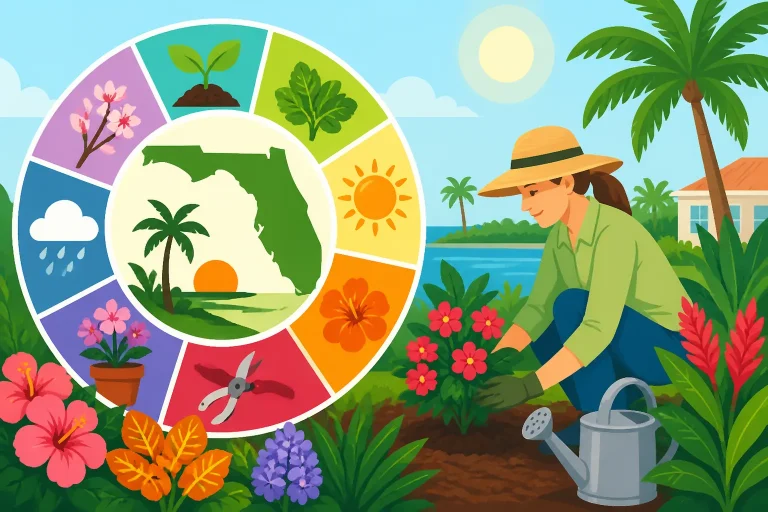
A USDA hardiness zone can help you compare winter cold, but it cannot tell you by itself when to sow, transplant, or prepare a Florida bed. That leaves many gardeners unsure which planting advice fits their part of the state. Regional garden calendars offer a better starting point for seasonal timing, while local weather, site conditions, and the crop itself help you decide when to act.
Why a hardiness zone is not a planting calendar
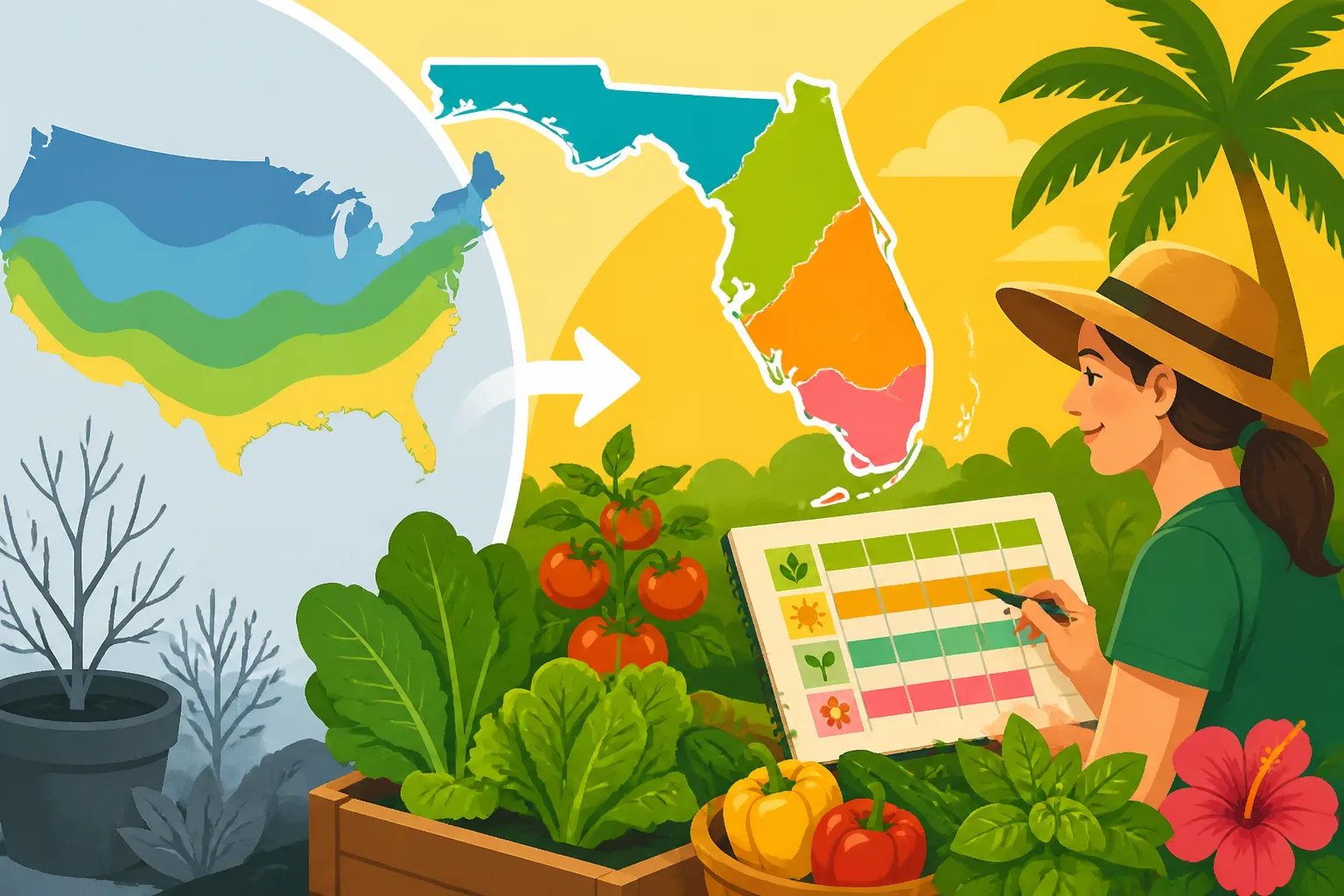
A hardiness zone and a garden calendar answer different questions. A zone is useful when you are choosing plants for a yard where winter cold may matter. A planting calendar is about timing garden tasks and crops through the changing seasons. Treating one as a substitute for the other can lead to decisions that look reasonable on a map but do not suit the weather or growing conditions in your garden.
That difference matters in Florida. A zone may help narrow down whether a plant is a reasonable candidate for your area, but it does not give you a complete schedule for sowing vegetables or setting out transplants. Nor does a zone describe everything that affects a garden bed, such as a sheltered spot near a wall, a low area that catches cold air, sandy soil that dries quickly, or a shaded patch under trees.
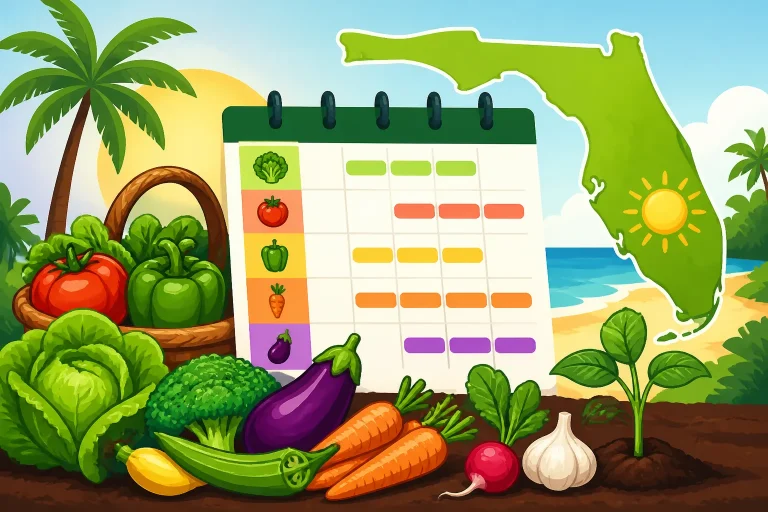
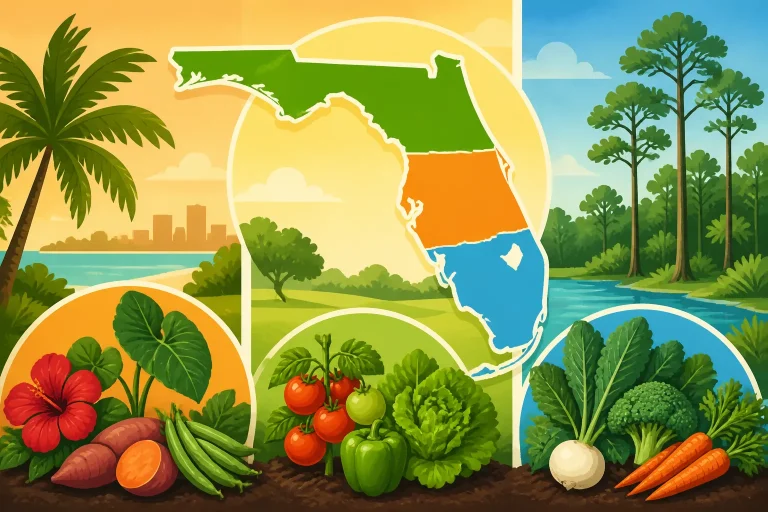
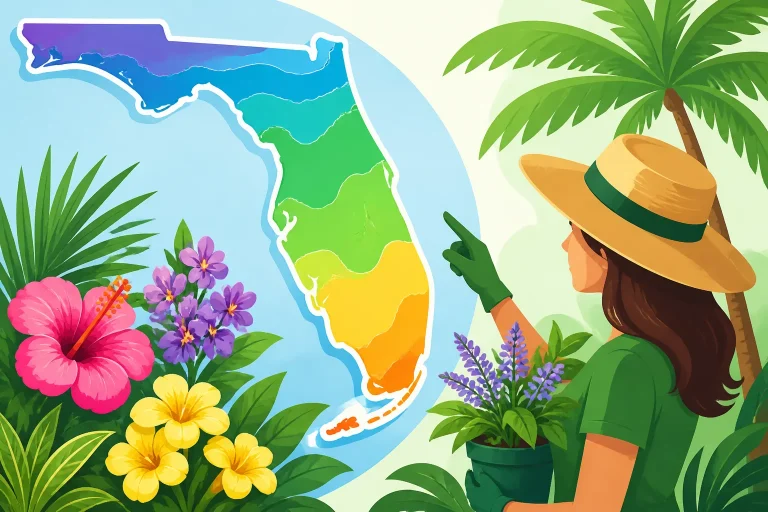
The University of Florida, Institute of Food and Agricultural Sciences (UF/IFAS) states that the Gardening Calendar has separate editions for North, Central, and South Florida. Those regional editions make a useful first stop when a generic planting chart or a search result gives advice that seems too broad. For help identifying which area fits your garden, see North, Central, or South: Finding Your Florida Gardening Map.
The most practical approach is to use the resources for different jobs:
- Use a hardiness zone to help assess whether a plant can handle the winter cold expected in its general area.
- Use a regional calendar to consider seasonal planting windows and garden tasks.
- Check your immediate site and current conditions before making a decision.
- Match the advice to the crop, planting method, and maturity needs.
This distinction can prevent a common planning error: seeing that a plant is suitable for a zone and assuming it can be planted at any time. Suitability does not mean that every planting date will work. A vegetable may be able to grow in a region but still be sensitive to heat, cold, heavy rain, or a narrow window in which it can mature well. The planting schedule matters, not just the plant’s ability to survive winter.
A calendar also should not be treated as a promise about the weather. It provides seasonal guidance, but conditions shift from year to year and differ from yard to yard. A calendar entry can help you plan, but checking the forecast and your garden’s actual conditions helps you decide whether the moment is right.
How Florida’s regional editions help narrow the timing
A statewide planting recommendation can be too broad to guide a decision in a state with varied seasonal conditions. Regional editions give gardeners a more relevant starting point than a single schedule intended to cover every Florida yard. They also remind you to look for guidance meant for your part of the state rather than assuming a planting window applies equally everywhere.
Start with the region that fits your garden
First identify whether the North, Central, or South Florida edition is the closest fit for your garden. If you are uncertain, use a regional map or planting resource to orient yourself rather than choosing an edition based only on a nearby city’s name. Regional boundaries and growing conditions do not necessarily align neatly with how a gardener describes a place.
If you live near a transition between regions, the nearest edition is still a useful reference, but it may not capture every feature of your yard. You can compare its advice with the conditions you observe locally and with current weather. Avoid combining calendar recommendations from different regions without a reason: doing so can make a plan confusing instead of more accurate.
Treat regional timing as a first filter
A regional calendar helps you decide what advice deserves a closer look. When a crop or task appears in the calendar for your region, use that as an invitation to check the details: Is it intended for direct sowing or transplanting? Does the recommendation assume a particular season? Does the crop need time to mature before the weather becomes unsuitable?
You can use that same filter when reading advice from seed packets, gardening articles, or people in other parts of Florida. A recommendation from elsewhere may be useful, but it should not automatically overrule a calendar aimed at your region. Compare the guidance, then ask what conditions the recommendation assumes.
For a wider view of how regional calendars fit into seasonal planning, see The Florida Gardening Calendar: Month-by-Month Landscape Guide and Florida Vegetable Planting Calendar: When to Grow Each Crop. These resources can help you connect a crop schedule with the broader rhythm of garden work.
Use regional guidance without assuming every yard is alike
A regional edition cannot account for every yard. Two gardens in the same broad area may differ in exposure, shade, drainage, nearby structures, and how quickly their soil warms or dries. Those differences affect what you can do on a particular day, even when both gardeners are following the same regional resource.
Think of the calendar as a sensible starting line, not a command. It can help you avoid choosing a planting window from the wrong part of the state. Your site observations help refine the decision. If a calendar suggests considering a crop during a particular season, check whether your soil is workable, whether the bed drains, and whether upcoming weather suits the crop’s needs.
How to read a regional calendar for a real garden task
A calendar is most useful when you read it with a specific task in mind. Rather than scanning a list and planting everything that appears, choose a crop or garden job, then look for the details needed to carry it out. The goal is not just to find a date. It is to understand the conditions and steps that make the timing useful.
Identify the action, not only the season
Look at the calendar entry and determine whether it concerns sowing seeds outdoors, starting seeds indoors, transplanting, soil preparation, or another garden task. These actions are not interchangeable. Seeds placed directly in a bed face its soil and weather conditions immediately. Indoor-started seedlings need time to develop and then must adjust to outdoor conditions. A transplanted crop has different preparation and establishment needs.
If you are deciding how to start a crop, Direct Sowing vs Starting Transplants for Florida Garden Crops can help clarify the trade-offs. The best method depends on the crop and the conditions you can provide, not simply on a date appearing in a calendar.
Check what the entry assumes
Before acting, ask what conditions the recommendation appears to assume. Does the crop prefer cool or warm conditions? Does it tolerate wet soil? Is the entry about a planting window or a task that should happen before planting? If the calendar uses a broad seasonal label, read any related guidance rather than interpreting that label as an exact instruction for every yard.
A seed packet can provide information about germination and maturity, while regional guidance helps you judge whether the season suits the crop in Florida. Use the two together. Do not assume that directions written for a different climate are automatically appropriate for your garden. When information conflicts, consider which source is addressing your region and the specific planting method.
Plan backward from the crop’s needs
Timing is easier to evaluate when you think backward from what the crop needs. A seedling needs time to establish. A vegetable needs a suitable stretch of growing conditions to develop and produce. A crop that takes a long time to mature may be a poor fit if conditions are likely to turn unfavorable before it finishes. The relevant question is not only whether you can plant it today, but whether it has a realistic path to maturity.
Use the crop’s stated days to maturity as a planning clue, not a guarantee. Actual growth changes with weather, water, soil, and plant health. For more on using that information, see Estimating Florida Harvest Dates Using Days to Maturity. If the likely growing window seems tight, consider a faster-maturing option, a different planting period, or a smaller trial rather than committing the whole bed.
Confirm that the bed is ready
A calendar cannot tell you whether your own bed is ready to plant. Check that the soil is not waterlogged or so dry that preparation will be difficult. Look for weeds, compacted areas, poor drainage, and spots where water collects. Confirm that the planned crop has the light and space it needs.
Florida gardens can include sandy soil that loses moisture quickly, as well as places where drainage or compaction creates different challenges. If soil quality is part of the problem, Improving Florida Sandy Soil: Organic Matter and pH Fixes explains why amendments should respond to a real need instead of being added automatically. A regional planting window cannot make an unsuitable bed ready by itself.
| Planning question | What to check | How it helps |
|---|---|---|
| Which calendar should I use? | The regional edition that best fits your garden | Keeps statewide advice from standing in for regional guidance |
| What does the entry recommend? | The crop, task, season, and planting method | Clarifies whether the advice fits the action you plan |
| Is the timing still suitable? | Current forecast and recent weather | Helps account for conditions that have shifted |
| Is the site ready? | Soil moisture, drainage, light, and space | Identifies problems a calendar cannot see |
| Can the crop finish well? | Crop maturity needs and the likely growing window | Reduces the chance of planting too late for useful growth |
How to adjust the calendar to your yard
The regional edition helps orient your plan, but your yard supplies the finer detail. A practical gardener does not need to disregard the calendar whenever conditions differ slightly. Instead, use it alongside simple observations to decide whether the recommended task is sensible at your site.
Notice the patterns in your own garden
Pay attention to where sunlight reaches the bed and when shade falls across it. A planting area next to a wall may receive different exposure from an open bed. A low spot may stay wet longer than a raised area. A bed beneath tree branches may receive less direct light and compete with tree roots for moisture.
Keep notes about these patterns. Record when a bed dries after rain, where plants struggle during heat, and which areas are exposed to wind or protected by structures. This is especially helpful when a plant fails, because the calendar may have been appropriate while the site was not. When Local Florida Microclimates Outweigh Mapped Zones offers more detail on why a specific yard can behave differently from its broader area.
A simple garden record does not need to be elaborate. Note what you planted, where it went, how it was started, and what happened. Over time, those observations help you see which beds are consistently early to warm, slow to drain, shaded, or exposed. That information can guide adjustments without turning every planting decision into a guess.
Observe the weather instead of relying on a fixed date
A calendar is a planning tool, not a forecast. Check conditions before sowing or transplanting, especially if a cold snap, heat spell, or heavy rain is expected. A short stretch of unsuitable weather can make a well-chosen planting window a poor time to act.
This matters when interpreting advice that is written as a seasonal range. The range helps you plan ahead, but it does not guarantee that every day in it is suitable. If weather is unstable, you might prepare a bed but postpone sowing. Or you might wait to transplant until seedlings and forecast conditions are more compatible. The choice depends on the crop and how much risk you are willing to accept.
Cold conditions deserve particular care for sensitive crops. A regional calendar cannot tell you whether a specific overnight forecast will damage a particular bed. For practical steps before a cold night, see How to Protect Florida Garden Beds Ahead of an Overnight Freeze. If weather alerts are confusing, Understanding Frost, Freeze, and Hard Freeze Weather Warnings can help distinguish the terms used in forecasts.
Consider soil moisture and drainage
Weather affects a planting bed through both temperature and moisture. Heavy rain can leave soil difficult to work or create conditions that stress roots. A dry stretch can leave recently planted seeds and transplants needing careful attention. A bed may also drain differently from the surrounding yard, so rainfall alone may not tell you whether it is ready.
Check soil conditions at the bed rather than assuming every part of the property has received or retained the same amount of water. If soil is saturated, avoid treating a calendar entry as a reason to work it immediately. If it is dry, consider whether the crop can be established with the water available. Checking Soil Moisture Before Turning on Garden Irrigation and Did It Rain Enough to Skip Watering Your Florida Beds? can help you make irrigation decisions based on conditions rather than habit.
Adapt in small steps when conditions are uncertain
When you are unsure whether an adjustment is appropriate, avoid making the whole garden depend on one guess. Try a small planting first, or divide a bed so that you can compare approaches. This is useful when a regional recommendation and your site conditions seem slightly out of step, but there is no clear reason to abandon the recommendation entirely.
A limited trial helps you learn without risking all of your seed or bed space. Keep the crop, location, and planting method clear in your notes. If the trial struggles, look for causes such as poor germination, excess moisture, pests, or an unsuitable light level before concluding that the calendar was wrong.
Build a planting plan that can change
A garden plan is more useful when it includes room for weather and crop performance. If every bed is committed to a rigid schedule, a delay can disrupt the whole season. A flexible plan lets you prepare ahead while keeping options open.
Sort crops by what they need
Group crops according to their seasonal preferences and planting method. Keep cool-season crops together in your notes and warm-season crops in another group, then compare each with the regional calendar. This makes it easier to see when a bed may transition from one use to another.
The grouping need not dictate an exact date. Its purpose is to help you notice conflicts, such as planning to keep a slow-growing crop in a bed needed for another planting, or starting seedlings too early for the outdoor conditions they will face. For help with seasonal choices, see Florida Fall Vegetable Guide: Crops for Cool Weather and Crops That Can Handle Florida Summer Heat in the Garden.
Leave room between planting cycles
A productive bed still needs a sensible transition between crops. Once a crop is harvested or removed, inspect the bed before planting something else. Clear plant debris that may be diseased, check soil moisture and structure, and consider whether the next crop belongs in that space. If the same plant family has occupied the bed repeatedly, rotation may help diversify the plan.
Succession planting can extend the harvest of crops that you use regularly, but it works best when you account for changing weather and the needs of each planting. It is not simply repeating the same sowing on a fixed schedule. Succession Planting in Florida for a Steady Vegetable Harvest and Rotating Crop Families Across Consecutive Florida Garden Seasons provide more guidance on keeping a bed useful across planting cycles.
Track the decisions that explain success or failure
When a planting performs poorly, the date may be only one piece of the explanation. Record whether you sowed directly or transplanted, how the bed drained, what the weather was like, whether plants received enough light, and whether pests or disease appeared. These notes let you evaluate the decision more fairly.
A short note such as “seedlings emerged unevenly after heavy rain” is more informative than “planting failed.” The first observation suggests what to investigate next; the second does not. Likewise, record good results. If a crop performed well in a particular bed under a particular seasonal pattern, that is useful local knowledge for future planning.
Keep records simple enough that you will actually use them. A calendar, notebook, or basic spreadsheet can work. You do not need to record every garden detail. Focus on information that helps answer practical questions: What did I plant? How did I start it? What conditions followed? When did the crop begin to struggle or produce? Did the bed have any unusual features?
Coordinate seeds, transplants, and bed preparation
Planting windows are easier to use when you look at the whole process rather than only the final planting day. If starting seeds indoors, work backward from the likely transplant period and check the crop’s instructions. If buying transplants, inspect them before planting and make sure the bed and weather are suitable. If sowing outdoors, prepare the bed when soil conditions allow rather than leaving all preparation until the planned sowing day.
For indoor starts, Starting Seedlings Indoors Ahead of Florida’s Spring Windows can help you think through the relationship between seedling preparation and outdoor timing. For transplant care, see Watering New Florida Transplants and Tapering Off Irrigation. Each step has its own needs, so a planting calendar should be part of the plan rather than the only plan.
Common mistakes when using Florida planting calendars
A calendar is easy to misuse when gardeners treat it as a list of dates rather than a tool for making decisions. Avoiding a few common habits can make regional advice much more useful.
Copying dates from a different region
Advice written for another part of Florida may not suit your garden’s seasonal conditions. A recommendation may still be relevant, but check its intended region and compare it with your regional calendar before acting. Search results and gardening conversations often omit that context, which can make a date seem universal when it is not.
When you see a recommendation, ask where it applies, what crop it concerns, and whether it assumes direct sowing or transplanting. If those details are missing, treat it as general inspiration rather than a firm schedule.
Treating a calendar as an exact forecast
Seasonal guidance cannot predict every cold snap, heat spell, or rainy stretch. It helps organize planning, but it does not remove the need to check conditions. If the forecast suggests that a planting would face unsuitable weather, consider waiting or protecting the crop as appropriate rather than following a calendar entry automatically.
The reverse is also true: one warm afternoon does not necessarily mean that the season has settled into a lasting pattern. Use recent weather and the forecast together with the calendar rather than reacting to a single day.
Planting a crop without considering how long it needs
A crop may be listed as suitable for a season but still fail if it does not have enough time to develop before conditions turn unfavorable. Check the crop’s maturity information and consider whether the remaining window is realistic. If it looks uncertain, choose a shorter-term crop, start with a smaller planting, or plan for a different season.
Keep in mind that stated maturity periods are estimates, not a promise that harvest will occur on a precise day. Weather and growing conditions can change how quickly a plant develops.
Confusing plant survival with good garden performance
A plant’s ability to survive a winter does not tell you whether it will thrive in the conditions when you plan to grow it. A vegetable may tolerate a range of conditions but produce poorly when exposed to heat or moisture stress. A landscape plant may survive but struggle in a location with unsuitable light or drainage.
For landscape choices, combine zone information with the plant’s needs and the characteristics of your site. For vegetables, give greater attention to seasonal timing, planting method, and the crop’s expected growing conditions. For more context on the limitations of zones, see Florida Planting Zones: Choosing Plants Adapted to Your Zone.
Assuming every yard in a region behaves the same way
A regional edition has to be broad enough to serve many gardens. It cannot account for a shaded courtyard, a windy open bed, a low area that stays wet, or a sunny container on a patio. Make the calendar more useful by tracking how your own site behaves and adjusting where the conditions differ.
Making several changes at once
If you move a crop to a new bed, change the planting method, alter irrigation, and adjust the timing all at once, it can be hard to tell what helped or hurt. When possible, make changes in a way that lets you compare results. A small trial or a clear garden note can help you learn what is actually happening.
Forgetting that the crop is only one part of the plan
Good timing cannot compensate for poor drainage, inadequate light, unhealthy seedlings, or a pest problem. If plants fail, check the full set of growing conditions before repeating the same planting at a different time. Planning Your Florida Vegetable Plot: Soil Prep to Pest Scouting offers a broader way to think about preparation and ongoing crop care.
A practical workflow for using the regional calendar
Use this sequence whenever you are considering a new sowing, transplant, or seasonal garden task. It keeps the calendar central without asking it to answer questions it cannot.
- Choose the regional edition. Start with the North, Central, or South Florida calendar that best fits your garden. If you are unsure about the region, consult a regional planting map.
- Name the task. Decide whether you are sowing outdoors, starting seeds, transplanting, preparing a bed, or doing another job. Find advice that addresses that specific action.
- Check the crop’s needs. Review its seasonal preference, planting method, light needs, and maturity information. Do not assume a date alone means the crop is a good fit.
- Inspect the site. Check sunlight, drainage, soil moisture, available space, and any recurring microclimate patterns.
- Check current conditions. Look at recent weather and the forecast, especially for cold, heat, and heavy rain that could affect establishment.
- Prepare the bed and materials. Make sure the site, seeds or transplants, and watering plan are ready before planting.
- Choose whether to proceed, wait, or trial. If conditions fit, plant. If not, adjust the plan or start small.
- Record the result. Note what happened and what you would change next time.
This process is useful whether you are planning vegetables, herbs, or seasonal maintenance. It also provides a reason to revisit the calendar during the season, rather than relying on memory or repeating last year’s timing without checking conditions.
If you want to compare local advice with the larger seasonal picture, Beyond USDA Zones: Using Regional Florida Garden Calendars is the right frame: zones help answer one question, while regional calendars and site observations help answer another. For planting windows, How to Read Florida Vegetable Planting Windows and Split Seasons can help you interpret recommendations without treating them as fixed promises.
Frequently Asked Questions
Should I follow the calendar or the weather forecast?
Use both. The calendar helps you plan for the season in your region, while the forecast helps you judge whether current conditions are suitable for acting now. If they point in different directions, consider waiting or adapting the plan rather than treating either one as an absolute instruction.
Can a USDA hardiness zone tell me when to plant vegetables?
Not by itself. A zone helps with questions about winter cold and plant suitability, but vegetable timing also depends on seasonal conditions, crop needs, and the planting method. Use a regional calendar as a more relevant starting point for scheduling.
What if my garden is near a regional boundary?
Start with the edition that best fits your location, then compare its guidance with your local conditions. If the advice seems poorly matched to your yard, account for the site’s light, drainage, and exposure, and consider a small trial before committing a large bed.
Why did a crop fail when I planted it during a suggested window?
The planting window is only one part of success. Weather, soil moisture, drainage, light, planting method, pests, and crop maturity needs can all affect the result. Review those factors before concluding that the regional timing was wrong.
Sources
- University of Florida, Institute of Food and Agricultural Sciences (UF/IFAS) — Florida Gardening Calendar – Solutions for Your Life – University of Florida, Institute of Food and Agricultural Sciences – UF/IFAS (checked November 14, 2026)
- University of Florida, Institute of Food and Agricultural Sciences (UF/IFAS) — Florida Gardening Calendar – Solutions for Your Life – University of Florida, Institute of Food and Agricultural Sciences – UF/IFAS (checked November 14, 2026)
Disclaimer
This article is for general informational purposes only and does not constitute professional advice. Laws, prices and regulations vary by location and change over time. Consult a qualified professional for guidance on your specific situation. Florida Gardening Guide is not a government agency and is not affiliated with any university extension, state department of agriculture or other government agency.