Florida Vegetable Planting Calendar: When to Grow Each Crop
Florida gardeners often struggle to fit vegetables into a calendar designed for places with one spring and one fall. In Florida, planting windows shift from north to south, and heat, rain, and occasional freezes can matter as much as the month. This calendar explains how to choose a regional window, what to grow in each season, and when to sow or transplant common crops.
How to read a Florida vegetable planting calendar
Florida does not have one statewide planting schedule. A crop that thrives in a cool North Florida fall may struggle if planted at the same time in South Florida, where warm weather lasts longer. Use regional recommendations as a starting point, then adjust for your yard, current conditions, and the crop’s days to maturity.
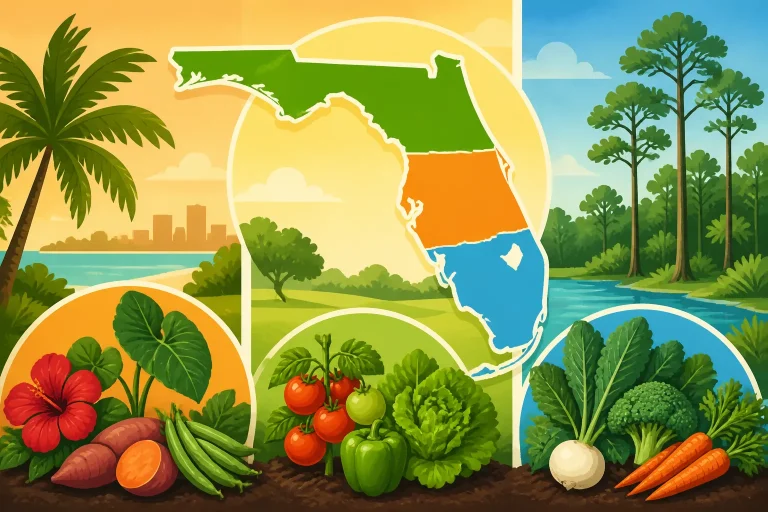
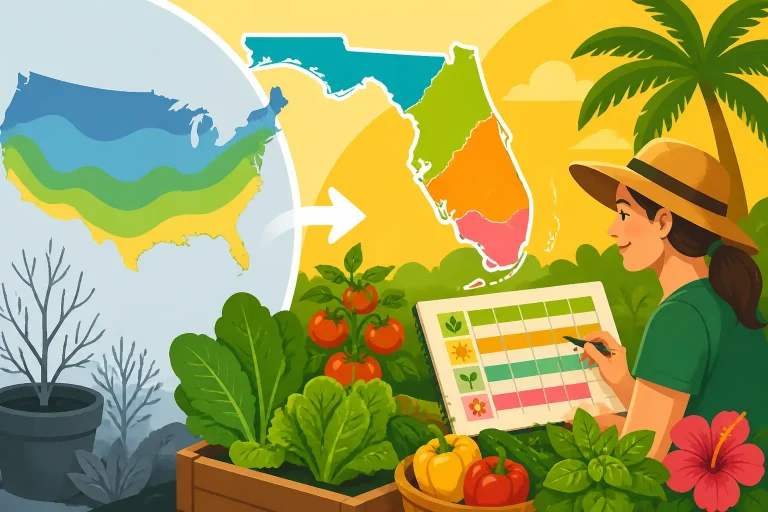
Most calendars divide Florida into three broad gardening regions: North, Central, and South. The boundaries are useful for planning, but they do not capture every local difference. Coastal areas may warm earlier or stay mild later than nearby inland areas; low spots can collect cold air; and walls, tree cover, and nearby pavement can alter the conditions around a bed. For more on regional differences, see Why Florida Vegetable Timing Relies on Region Over Hardiness and North, Central, or South: Finding Your Florida Gardening Map.
Think of a planting window as a period when a crop has a reasonable chance to establish and produce—not a guaranteed date. A forecasted cold snap, a prolonged hot spell, or waterlogged soil can make a normally suitable week a poor time to plant. Where available, use a current Florida regional vegetable calendar or county planting map for the specific crop and location. The Reading the UF/IFAS Florida Gardening Calendar by Region article explains how to interpret regional recommendations.
A few terms help when comparing calendars:
- Direct sow means putting seed straight into the bed or container where the crop will grow.
- Start indoors means sowing seed in a protected place, then moving the seedlings outdoors when they are ready and conditions suit the crop.
- Transplant means planting a seedling that has already been started in a pot or cell.
- Days to maturity is an estimate of the time from a stated starting point—often sowing or transplanting—to harvest. Check the seed packet or plant tag because the starting point and conditions can vary.
A planting calendar helps narrow down the season, but it cannot substitute for checking the variety’s growing requirements. A crop may be listed for a window and still fail if it is planted too deep, kept too wet, or shaded for much of the day. For a broader look at timing, varieties, and care, see Guide to Florida Vegetable Garden Planning and Crop Care.
Florida’s planting seasons by region
The most useful first step is to separate the year into cool-season and warm-season crops. Cool-season crops generally prefer milder conditions and can struggle when heat arrives. Warm-season crops need warm soil and air to grow well, but many also stop setting fruit or become stressed during Florida’s hottest weather.
The table below gives a seasonal framework, not a substitute for a crop-specific calendar. It reflects broad patterns; local windows can overlap, and a particular crop’s best timing depends on the region and the weather.
| Region | Main cool-season opportunity | Main warm-season opportunity | Main planning concern |
|---|---|---|---|
| North Florida | Fall through winter and into early spring, depending on cold risk | Spring after cold risk eases; some crops can be planted again as summer conditions change | Late cold snaps in spring and early freezes in fall or winter |
| Central Florida | Fall through winter and into early spring | Spring and, for suitable crops, another planting period as fall approaches | Heat can arrive before a slow crop finishes |
| South Florida | Fall and winter are often the most comfortable period for many cool-season crops | Warm-season crops can have a longer opportunity, with timing adjusted to avoid the most stressful conditions | Heat, heavy rain, and the length of the hot season |
North Florida usually has the strongest need to plan around cold. Gardeners there may have to wait for cold risk to ease before setting out tender crops in spring, then choose varieties and planting windows that leave enough time before cold returns. Central Florida has a longer transition between cool and hot conditions, but the spring window can close quickly for crops that need mild weather. South Florida’s longer warm season does not mean every crop can be grown comfortably all year: many vegetables still benefit from avoiding the most intense heat and rain.
Frost and freeze risk varies by year and location. A calendar date should not be treated as a promise that cold weather has ended or begun. Check the forecast close to planting time, and use local weather-station information when planning crops that are sensitive to cold. For a more detailed look at regional dates and risk, see Checking Freeze Dates for Your Nearest Florida Weather Station and How Regional Freeze Probabilities Change Planting Dates.
Hardiness zones can help when choosing long-lived plants, but they do not tell you when to sow vegetables. Vegetable timing depends on the crop’s tolerance for heat and cold, the season length, and how long the plant needs to reach harvest. If you want to understand that distinction, see [Using the USDA Plant Hardiness Zone Map for Florida Yards].
Cool-season vegetables: plan for mild weather
Cool-season vegetables are usually most reliable when temperatures are mild enough for steady growth. In much of Florida, that means planning a fall or winter garden rather than assuming that spring is the only time to grow them. North and Central Florida gardeners often use a fall planting to get crops established before colder weather, while South Florida gardeners can take advantage of its milder season for crops that dislike heat.
Some cool-season crops tolerate light cold better than others, but seedlings and developing heads can still be vulnerable to sharp temperature changes. Give slow-growing crops a head start within their regional window, and check days to maturity before sowing. If a crop needs a long time to finish, planting late in its preferred season can leave it exposed to heat before harvest.
Broccoli, cabbage, cauliflower, and other cole crops
Broccoli, cabbage, and cauliflower are generally best planned for the cooler part of the year. In North and Central Florida, gardeners commonly aim for fall establishment and winter growth, with spring opportunities varying by crop and local conditions. South Florida gardeners usually plan these crops for the cooler months rather than the hottest part of the year.
Transplants can be useful when you want to give a crop a strong start or when the outdoor planting window is short. Seedlings should be healthy and not badly root-bound. Once planted, keep moisture reasonably consistent; swings between dry soil and very wet soil can stress young plants. Avoid placing these crops where they will be shaded for most of the day, particularly during the milder months when sunlight is less intense.
Broccoli and cauliflower can be disappointing when heat arrives before heads develop well. If a crop repeatedly forms small or poor-quality heads, check whether it was planted too late for the cool period, whether the variety suits your region, and whether the plants experienced uneven moisture. See Outdoor Sowing Dates for Florida Cabbage and Cauliflower for crop-specific timing questions.
Lettuce, spinach, kale, and other leafy crops
Lettuce is a classic cool-weather crop, but Florida gardeners often need to choose the right season and cultivar to keep it from bolting or turning bitter. In North and Central Florida, fall and winter are common windows; South Florida growers can also use the cooler months. The warmer the weather becomes, the more important it is to choose a suitable type and avoid delaying sowing.
Kale and collards can often handle cooler conditions than lettuce, but they still need a workable growing window. Sow or transplant them early enough to establish before the most difficult weather for your region. Leafy crops are often convenient for succession planting: instead of sowing the entire bed at once, plant a small amount at intervals that suit the crop and season. This can spread harvests and reduce the chance of having more mature leaves than you can use at once.
Spinach can be less dependable in warm conditions than some other leafy greens. If local recommendations show a narrow window, follow it closely rather than treating spinach as an all-season crop. For more specific guidance on greens, see Starting Collards and Kale for Florida Winter Harvests, Starting Crisphead and Romaine Lettuce for Florida Fall, and Sowing Fall Greens Across Florida’s Three Gardening Regions.
Carrots, beets, radishes, and turnips
Root crops are often easiest to direct-sow, because disturbing the young root can lead to misshapen vegetables. Prepare a loose, reasonably even seedbed and keep it moist while seeds germinate. Small seeds should not be buried too deeply; follow the seed packet for sowing depth and spacing.
Carrots and beets are commonly grown during cooler periods, with regional timing that shifts across Florida. Radishes mature quickly compared with many other vegetables, but they can still become tough or overly pungent when conditions are too warm or growth is uneven. Turnips and other roots also benefit from timing that avoids both excessive heat and abrupt stress.
Thin crowded seedlings as directed on the packet. Crowding may leave roots small, while pulling larger neighboring seedlings can disturb plants you intend to keep. If the soil crusts after watering or rain, seedlings may have trouble emerging. A fine seedbed, gentle watering, and timely thinning can make more difference than sowing a large quantity of seed. See Direct-Sowing Carrots and Beets Across Florida Regions and Sowing Florida Radishes for Quick Fall and Winter Harvests.
Peas, broccoli relatives, and cool-season beans
English peas and snap peas prefer cooler conditions and should be planned around the cool part of the regional calendar. Their performance can fall off as warmth increases, so planting at the beginning of a suitable window is often more useful than waiting until the season is nearly over.
Beans are more complicated because the category includes crops suited to different conditions. Bush and pole beans are usually treated as warm-season crops, while some peas and other legumes are grown for a cooler window. Do not use a general “beans” recommendation without checking which crop it refers to. For bush beans, follow the warm-season timing in the next section.
Warm-season vegetables: wait for warmth, then watch the heat
Warm-season vegetables need conditions warm enough for active growth. Planting too early can leave seedlings stalled or damaged by cold soil and a late cold spell. Planting too late can expose crops to intense heat, heavy rain, or a short run-up to the next cool period. A region-specific calendar is especially helpful for crops that need a long stretch of favorable weather.
Tomatoes, peppers, and eggplant
Tomatoes, peppers, and eggplant are usually started from transplants rather than direct-sown outdoors. Their calendars often include a spring window in North and Central Florida and a cooler-season opportunity in parts of the state. In South Florida, many gardeners plan these crops for the milder part of the year, while heat and rain can make the hottest months challenging.
A transplant-ready seedling should be sturdy, not stretched and weak, and should have a healthy root system. Harden seedlings gradually before planting them outdoors so they can adjust to stronger light and wind. Planting a seedling into cold soil can set it back; waiting too long can put it into heat stress before it has established.
Tomatoes may flower but set little fruit when temperatures are unfavorable. That is not always a sign of a fertilizer problem. Check the planting window, night and daytime conditions, watering consistency, and variety before changing several things at once. Peppers and eggplant can also need time to establish before producing well. Allow enough space for air movement and access, and use supports if the selected type needs them. See Planting Florida Tomatoes Before Heat Halts Fruit Set and Selecting the Best Vegetable Varieties for Florida Gardens.
Cucumbers, squash, melons, and pumpkins
Cucumbers, summer squash, winter squash, and melons are warm-season crops, but they are not interchangeable in their timing or growing needs. Check the regional calendar for the particular crop and variety. Some are planted directly outdoors; others can be started in containers and transplanted carefully while young. Direct sowing avoids transplant disturbance, while starting seedlings can help you use a short window more efficiently.
These crops need room to spread or a suitable support system, depending on the variety. Their large leaves can shade nearby plants, so plan the bed before sowing. Good drainage matters: extended wet conditions can stress roots and increase disease pressure. During warm weather, soil moisture can change quickly, particularly in raised beds and sandy soil, so check the root zone rather than judging only by the surface.
Melons and squash need pollination to produce fruit. Poor fruit set can have several causes, including weather, plant stress, and limited pollinator activity. If small fruits begin to grow and then fail, check that the planting is healthy and that the crop is not being disrupted by pests or inconsistent moisture. A calendar cannot solve those problems alone, but planting at the right time gives the crop a better start. For more on choosing the method, see Direct Sowing vs Starting Transplants for Florida Garden Crops.
Beans, corn, okra, and southern peas
Bush and pole beans are commonly direct-sown after the soil has warmed. Sow only when conditions suit the crop, and provide a trellis for pole types before vines begin to run. Beans are often useful for staggered planting, but repeat sowing only when the regional window and current conditions remain appropriate.
Sweet corn is usually direct-sown and needs enough space for pollination. A small planting in a single short row may not pollinate as well as a block of plants. Because corn can take up a substantial area, decide how much bed space you can spare before sowing. Check the days to maturity and compare them with the remaining favorable period.
Okra is well suited to heat compared with many common vegetables, but it still needs warm conditions to establish. Southern peas also tolerate warm weather and are often included in summer garden plans. These crops can be options when lettuce and other cool-season crops are struggling, though their regional windows and care needs differ.
For all direct-sown crops, follow the seed packet for depth and spacing. Keep the seed zone moist while germination is underway, without leaving seeds in waterlogged soil. If a heavy rain is expected, consider whether the bed drains well enough to avoid washing seed out or burying it under soil crust.
Potatoes, sweet potatoes, and other crops with different planting material
Not every vegetable is planted from ordinary seed. Potatoes are started from seed pieces, while sweet potatoes are commonly grown from slips. Their planting material and timing differ from seed-sown vegetables, so use crop-specific regional recommendations rather than placing them in a broad seed-sowing category.
Prepare a suitable bed before planting, with room for the crop’s growth and harvest. Pay attention to drainage and the crop’s expected time in the ground. A crop that remains in place for months needs a longer planning horizon than a quick-growing radish. If you are uncertain whether a crop will mature within the available season, compare its days to maturity with the expected heat or cold transition and choose an earlier suitable planting window when possible.
Build a calendar around sowing method and harvest time
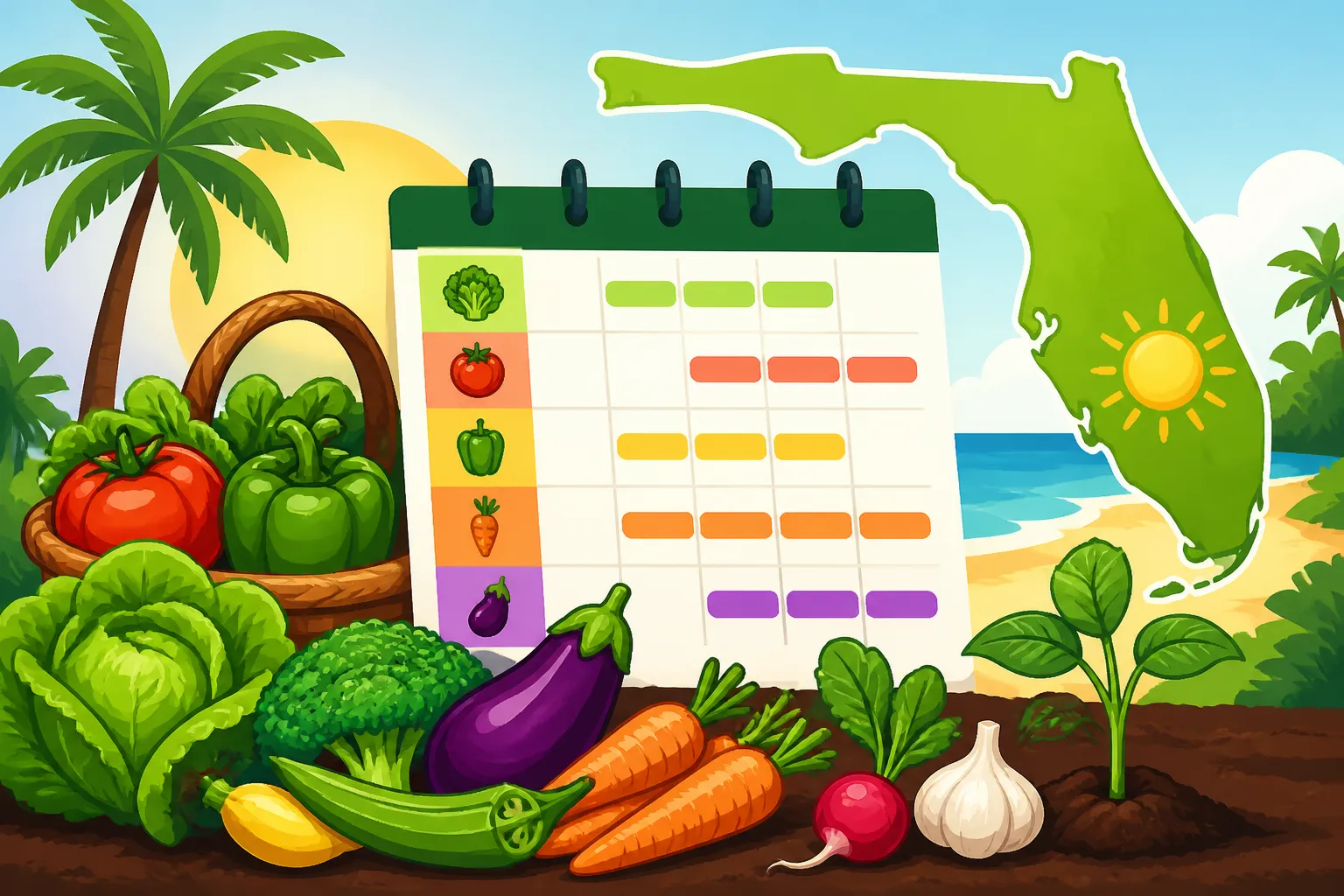
A good calendar is more than a list of dates. It connects the crop, the regional window, the seed packet, and the way you intend to grow the plant. Use this process before committing a bed to a full season.
- Choose the region that best fits your location. Start with a North, Central, or South Florida recommendation, then consider whether your yard is coastal, inland, low, exposed, or protected.
- Look up each crop separately. Avoid relying on a single “vegetable season” date. Tomatoes, carrots, corn, and lettuce have different temperature needs and planting methods.
- Decide whether to sow or transplant. Direct-sow crops that are usually planted in place. Use transplants for crops where that approach is recommended or where it helps you use a narrow window.
- Check the packet or plant tag. Confirm days to maturity, spacing, depth, and whether the maturity estimate begins at sowing or transplanting.
- Work backward from the likely end of the window. If a crop needs a long time to mature, do not plant it at the edge of a window unless the regional recommendation supports that timing.
- Check soil and weather before planting. Soil that is too wet, too cold, or too hot can delay establishment even when the calendar suggests it is a suitable period.
- Keep a simple record. Note the sowing or transplant date, variety, germination, harvest, and any weather problems. This helps you adjust your own planting plan without assuming next year will repeat the same conditions.
For example, if you want to grow lettuce and tomatoes in the same bed, do not assume they should be planted together because both appear on a garden calendar. Lettuce prefers a cooler period; tomatoes need warm conditions and enough time before heat limits fruit set. They may fit into different parts of the year or require separate beds. A crop plan can help you make those choices before buying seed.
Use succession planting selectively. It can work well for crops that mature quickly or produce over a limited period, but repeating a sowing does not guarantee a continuous harvest. The later planting may encounter different weather, pest pressure, or daylight conditions. If you want to plan multiple rounds, see Succession Planting in Florida for a Steady Vegetable Harvest and How to Stagger Planting Dates for Continuous Florida Crops.
Match the calendar to your garden, not just your region
Regional calendars are a strong starting point, but small differences around a home can change how a crop performs. A sunny bed near a wall may warm earlier than an open plot. A low corner can be colder on a calm night. A container can heat and dry faster than an in-ground bed, while a shaded area may delay growth even during an otherwise favorable season.
Before planting, look at the bed’s sun exposure, drainage, and access to water. Most fruiting vegetables need ample sunlight, while some leafy crops can tolerate a little less, particularly when heat is strong. Too much shade can slow growth and delay harvest. Poor drainage can cause roots to remain wet, while sandy soil may dry rapidly between rains or watering. For help choosing a spot, see Placing Florida Garden Beds for Daily Sun and Easy Water.
Pay attention to seasonal rainfall as well. A planting window may overlap with heavy rain, which can wash out seed, flatten seedlings, or keep beds saturated. In drier periods, newly sown rows and young transplants may need closer moisture checks. Water based on soil conditions and plant needs rather than a fixed schedule. Checking Soil Moisture Before Turning on Garden Irrigation offers a practical way to think about that decision.
Variety choice can also stretch or narrow a planting window. Some varieties mature sooner, tolerate heat better, or suit a specific growing style. That does not make them immune to unsuitable weather. Check local recommendations and the variety description, and avoid assuming that a variety marketed as heat-tolerant will produce well through every Florida summer condition.
If you are changing your plan because a crop looks stressed, diagnose the cause before adding fertilizer or spraying. Wilting, yellow leaves, poor fruit set, and slow growth can result from different problems, including temperature, watering, roots, pests, or disease. A calendar helps prevent some timing-related stress, but it cannot identify every garden problem. For more help with crop timing and weather adjustments, see How Florida Weather and Yard Microclimates Shift Planting Dates and Matching Florida Crops and Sowing Dates to Your Local Region.
Frequently Asked Questions
Can I use one planting calendar for all of Florida?
No. North, Central, and South Florida have different temperature patterns and cold risks. Use the calendar for your region, then account for local conditions such as coastal influence, elevation, shade, and drainage.
Is a vegetable planting window a guarantee of a good harvest?
No. A window indicates a period when conditions are generally more suitable, but weather can vary. Soil moisture, variety, pests, sunlight, and planting method also affect results.
Should I start every vegetable indoors?
No. Many crops are usually direct-sown, while others are commonly grown from transplants. Follow crop-specific regional recommendations and the seed packet. Some crops are sensitive to disturbance and may establish better when sown where they will grow.
Can I plant warm-season vegetables as soon as the calendar lists them?
Check conditions first. Warm-season crops need appropriate warmth, and a late cold spell can still damage tender plants. The calendar gives a starting window, not a substitute for checking the forecast and the bed.
What should I do if my crop is behind schedule?
Check the crop’s days to maturity and compare them with the remaining favorable season. If the crop is unlikely to finish before heat or cold becomes a problem, consider a faster-maturing suitable crop or wait for the next recommended window.
Disclaimer
This article is for general informational purposes only and does not constitute professional advice. Laws, prices and regulations vary by location and change over time. Consult a qualified professional for guidance on your specific situation. Florida Gardening Guide is not a government agency and is not affiliated with any university extension, state department of agriculture or other government agency.